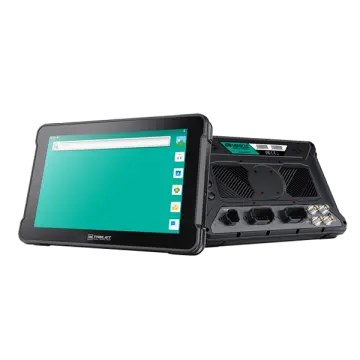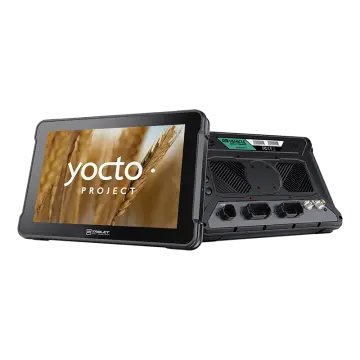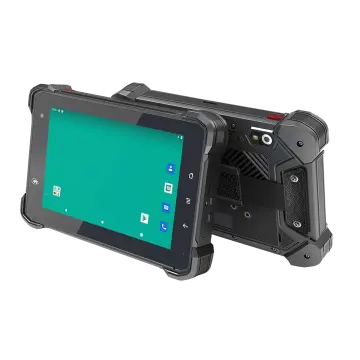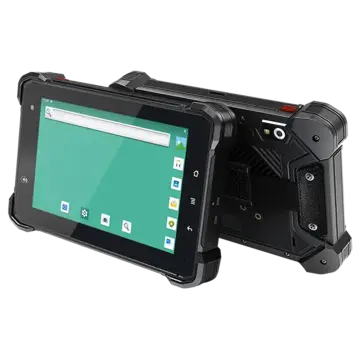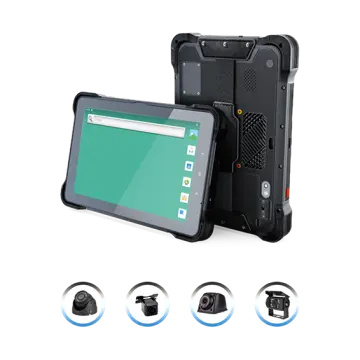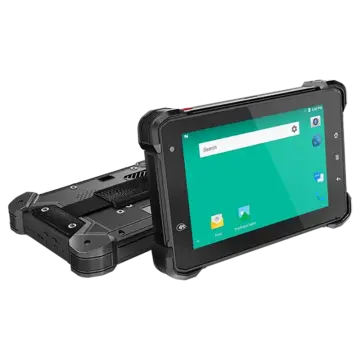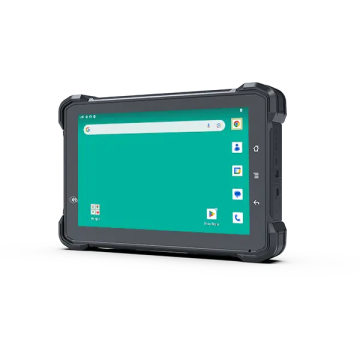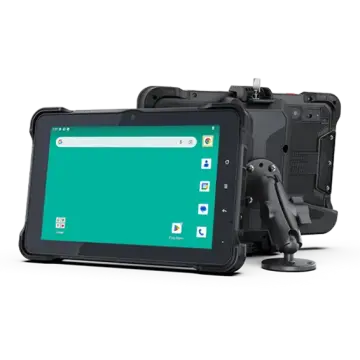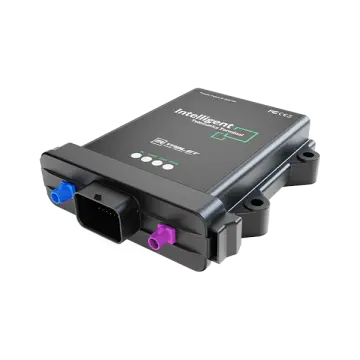
Integrated edge visualization terminals built with wide-voltage surge protection, rugged vehicle docks, and real-time sensor ingestion interfaces for dynamic autonomous vehicle road validation.
As autonomous vehicle (AV) development accelerates from laboratory closed-loop simulations into open-road commercial trials, test engineers face brutal operational environments that demand ruggedized, edge-capable Android hardware platforms.
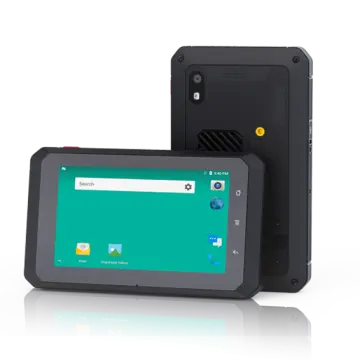
Modern autonomous testing rigs require real-time protocol bridging between high-speed CAN-FD, ISO 11898 networks, Ethernet AVB, and test engineer interfaces. An Android Industrial Tablet acts as the rugged localized telemetry gateway, allowing test drivers and field development engineers to monitor live steer-by-wire health, trajectory offsets, and sensor heartbeat diagnostics directly from the cabin cockpit.
Commercial tablets fail rapidly during dynamic track tests: thermal throttling halts real-time data streaming, sudden 36V automotive alternator load dumps destroy power supplies, and extreme chassis vibrations corrupt file systems. Rugged Android industrial vehicle tablets feature MIL-STD-810G shock ratings, IP67 waterproof enclosures, and wide 8-36V ISO 7637-2 surge compliance.
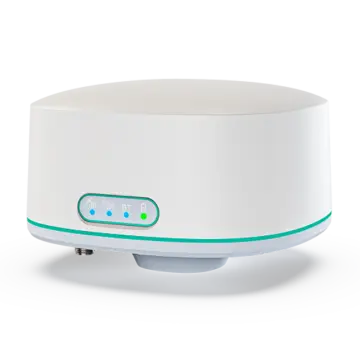
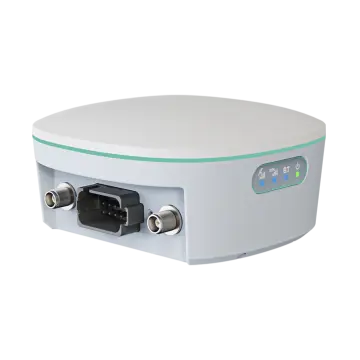
Ground truth validation for L3/L4 automated lane change, trajectory compliance, and automated emergency braking (AEB) benchmarks mandates real-time kinematic (RTK) positioning. Specialized Android tablets integrate multi-band GNSS receivers with NTRIP client services, logging ground-truth centimeter coordinates alongside lidar and camera perception metadata.
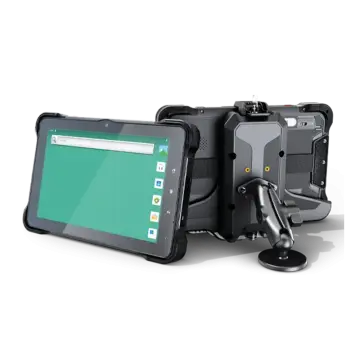
During safety driver trials of Robotaxi fleets and autonomous commercial trucks, the Human-Machine Interface (HMI) serves as a critical fail-safe conduit. An Android industrial tablet mounted securely via heavy-duty RAM mounts delivers low-latency visual alerts, lidar bounding box renderings, dynamic geofence state indicators, and manual takeover prompts.
Equipped with high-performance Qualcomm or NXP application processors, these terminals run customized Android BSPs engineered for zero UI latency. They directly receive telemetry queues from autonomous operating stacks like Apollo or ROS2 through high-speed Ethernet or isolated Wi-Fi 6 wireless bridges, ensuring that safety operators maintain total situational awareness under sub-millisecond conditions.
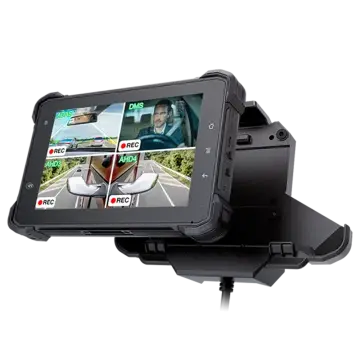
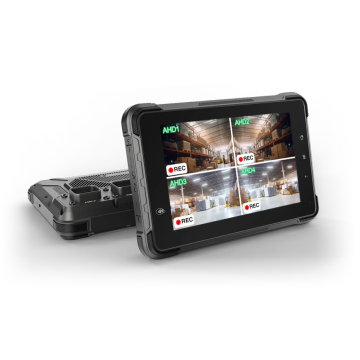
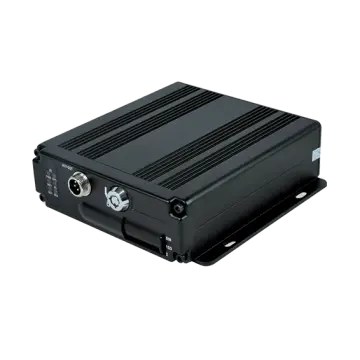
By integrating multi-channel Analog High Definition (AHD) camera inputs directly into the rugged tablet, test engineers can monitor real-time surround-view blind spots alongside synthesized ADAS bounding boxes. This instantaneous overlay allows calibration teams to detect sensor misalignment, lens occlusion, or parallax distortions on the test track without needing heavy, power-hungry rack-mounted PCs in the passenger seat.
Autonomous driving verification produces immense data bandwidth. While raw point clouds are stored on high-density SSD arrays, critical event markers, disengagement logs, system exceptions, and situational video clips must be indexed and dispatched to cloud analysis clusters in real time.
With integrated 4G/5G multi-carrier connectivity and dual-SIM redundancy, rugged Android tablets act as smart edge gateways. They compress disengagement telematics packets, geotag them with RTK coordinates, and stream encrypted MQTT or gRPC payloads to vehicle operations centers (VOC), ensuring test fleets remain completely observable across thousands of test miles.
In connected autonomous vehicle (CAV) validation zones, the Android industrial terminal serves as the test bench for Cellular Vehicle-to-Everything (C-V2X) communications. Safety drivers verify roadside unit (RSU) message broadcasts, traffic light phase countdowns (SPaT), and vulnerable road user (VRU) proximity warnings directly on an intuitive graphical interface.
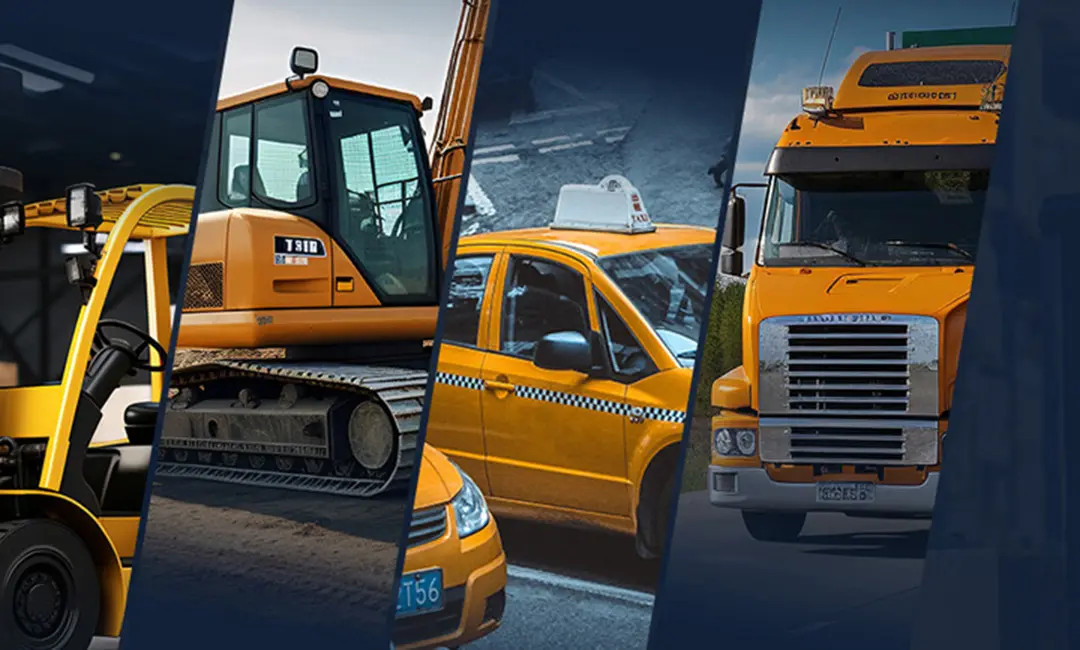
Detailed analysis of how rugged Android industrial tablets optimize test efficiency across four critical autonomous driving sectors.
In standardized proving ground trials, autonomous test mules must navigate strict Euro NCAP target scenarios, including pedestrian AEB, lane-keep assist (LKA), and intersection collision avoidance. The Android tablet acts as the in-cabin command console, synchronizing wireless triggers with ground target propulsion systems, logging vehicle dynamic velocity curves, and instantly alerting test drivers to abort criteria.
Autonomous haul trucks operating in open-pit mines endure relentless vibration, pervasive fine dust, and intense thermal fluctuations from -20°C to +65°C. With IP67/IP69K sealing and heavy-duty vibration dampening, 3Rtablet vehicle terminals survive these harsh environments, giving site test engineers continuous diagnostics over drive-by-wire hydraulic systems, payload weight sensors, and obstacle detection radars.
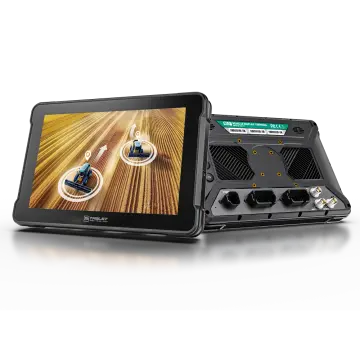
Autonomous tractors and harvesters depend on ultra-precise row guidance and ISOBUS telemetry. Rugged Android tablets mounted in the cabin or remote monitoring consoles provide real-time RTK correction streaming, implement hitch control testing, and multi-machine swarm synchronization, allowing agronomists and software teams to optimize furrow accuracy down to sub-inch tolerances.
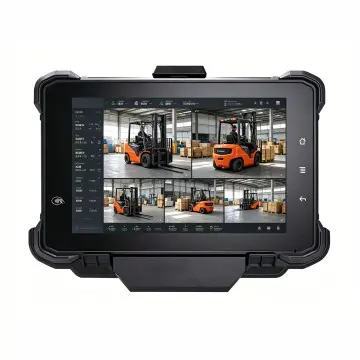
For low-speed autonomous distribution pods and yard tractors navigating logistics centers, safety and remote supervision are paramount. The in-vehicle Android terminal displays live path plans, dock approach angles, and battery battery-management system (BMS) health. In case of unexpected obstacle halts, remote dispatchers use the tablet's video stream for teleoperation guidance and yard clearance.


Explore our complete family of vehicle terminals engineered to endure tough automotive testing, agricultural automation, material handling safety, and commercial telematics deployments worldwide.