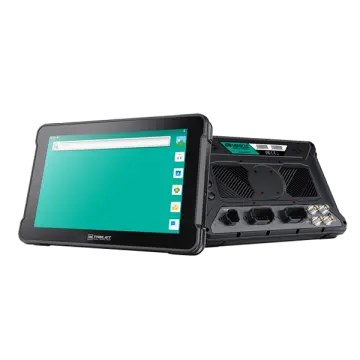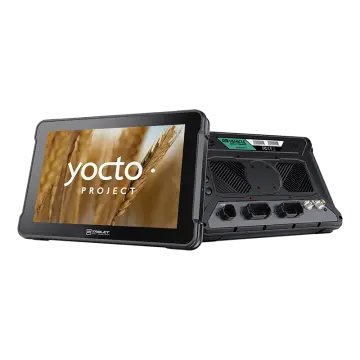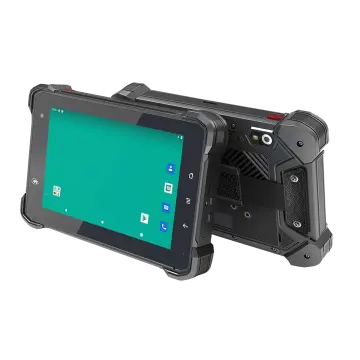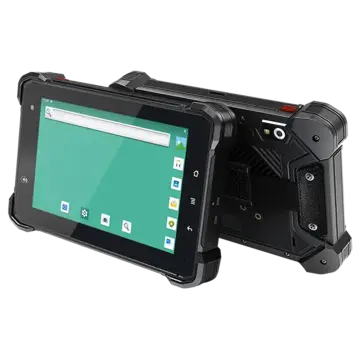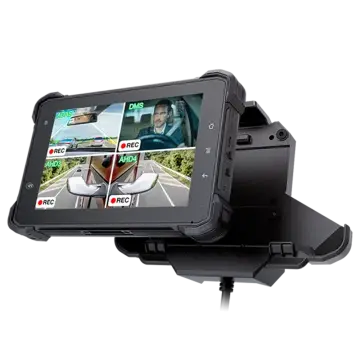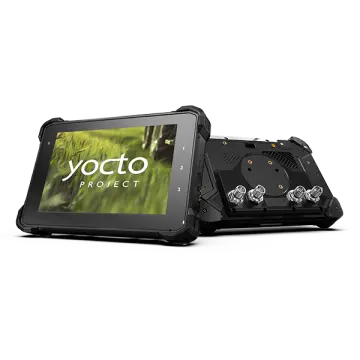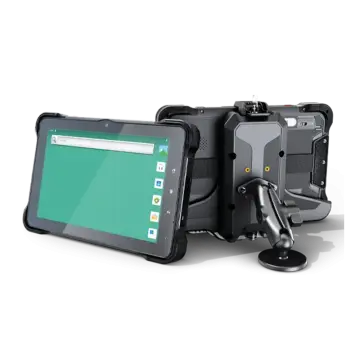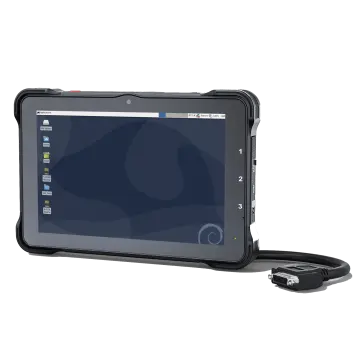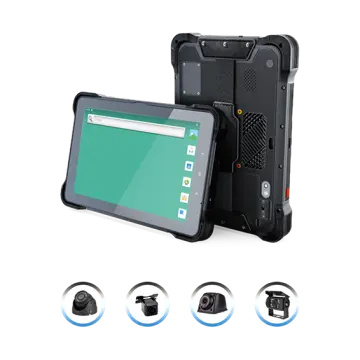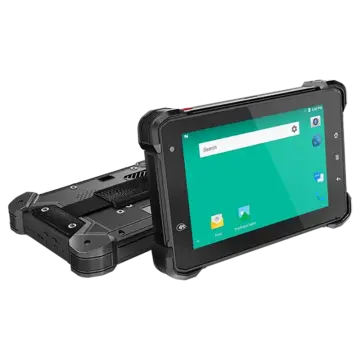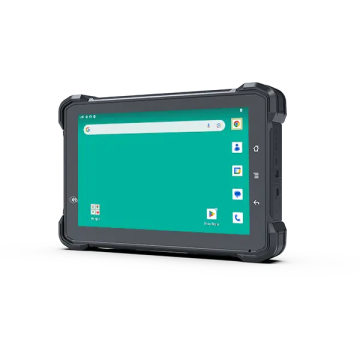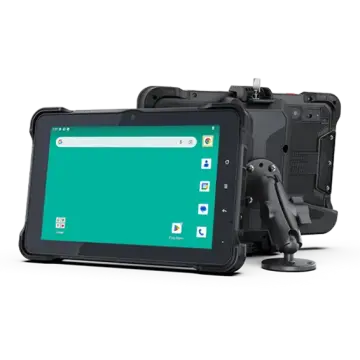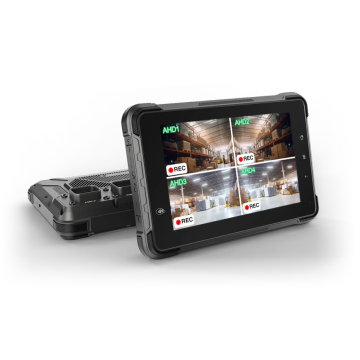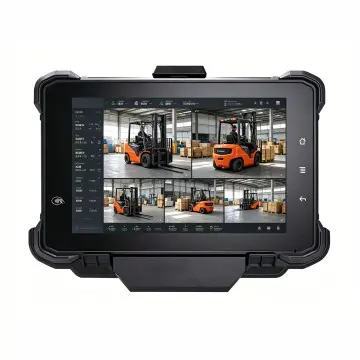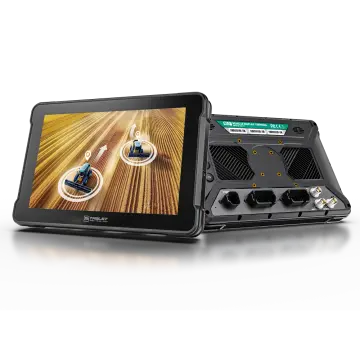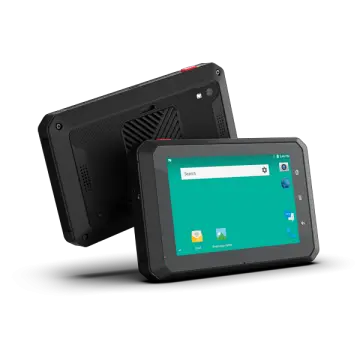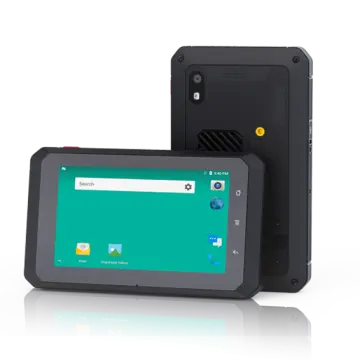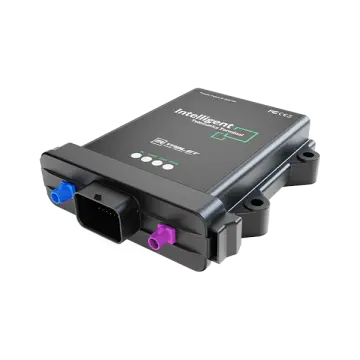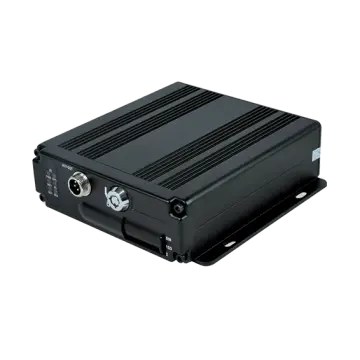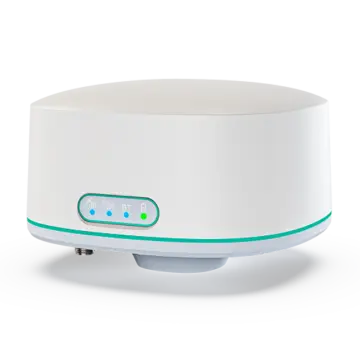
Industrial-grade vehicle human-machine interfaces (HMI) and compute nodes configured specifically for real-time edge telemetry, safety driver observation, and sensor suite monitoring in autonomous test beds.
The global transition from Advanced Driver Assistance Systems (ADAS) toward full SAE Level 4 (High Automation) and Level 5 (Full Automation) has fundamentally transformed the requirements for automotive verification and validation. In the modern validation loop, millions of physical edge-testing miles must be executed across heterogeneous operating environments, ranging from unstructured urban corridors to extreme-temperature proving grounds. Within this intricate ecosystem, the Android rugged tablet for autonomous driving test has transitioned from a passive ancillary screen to a mission-critical edge node, serving as the bridge between autonomous compute stacks (ROS 2, Apollo, Autoware, custom micro-kernels) and safety validation engineers.
Autonomous driving platforms generate gigabytes of telemetry data every second from LiDAR point clouds, radar clusters, and high-resolution camera feeds. An Android rugged tablet provides the necessary high-throughput, low-latency UI pipeline, rendering localized occupancy grids, dynamic bounding boxes, and path planning trajectories directly to cockpit co-pilots without degrading the primary AV compute cluster.
Safety drivers require uninterrupted situational awareness. High-brightness, optically bonded displays ensure visibility in direct solar conditions (1000+ nits), while integrated CAN-bus and GPIO ports facilitate immediate override tracking, system fault logging, and millisecond-accurate tagging of disengagement incidents for regulatory compliance and deep neural network (DNN) post-processing.
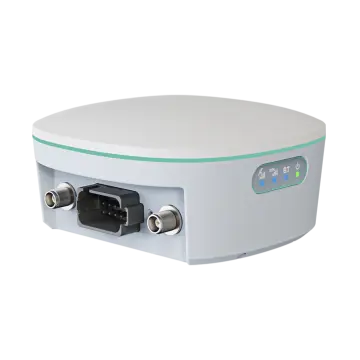
Testing scenarios demand centimeter-level positioning accuracy. Modern rugged vehicle terminals integrate multi-constellation RTK receivers and 5G low-latency modules to cross-examine onboard perception outputs against external ground-truth baselines, establishing transparent vehicle-to-infrastructure (V2I) communication streams in real time.
Historically, vehicle testing setups relied on bulky, commercial-grade laptops secured with makeshift bracket assemblies. These ad-hoc installations posed severe safety hazards during sudden decelerations, suffered thermal throttling during extreme weather trials, and constantly uncoupled from low-voltage vehicle power transients. The market has decisively pivoted toward purpose-built Android rugged tablets equipped with wide-voltage power supplies (ISO 7637-2 certified), heavy-duty RAM mounts, and specialized automotive connector interfaces (such as Amphenol or DB9/M12 connectors).
Furthermore, with the introduction of modern Android Enterprise and Google Mobile Services (GMS), vehicle test engineers can leverage containerized testing apps, secure ADB debugging, and centralized Over-The-Air (OTA) telemetry orchestration across enterprise test fleets comprising hundreds of autonomous test mules spanning North America, Europe, and the Asia-Pacific region.
A robust autonomous testing platform operates simultaneously on multiple layers: high-voltage sensor power distribution, low-voltage control loop execution, and edge analytics. Below is how the rugged Android tablet integrates within this operational matrix:
Direct connectivity via CAN-FD, RS232, and high-speed USB to ingest real-time trajectory plans, IMU dead reckoning, and vehicle state diagnostics.
GPU-accelerated vector rendering of 3D bounding boxes, road boundary vectors, and camera feeds using optimized OpenGL ES/Vulkan pipelines on Android.
Single-tap hardware or capacitive inputs instantly tag sensor data timestamps whenever an edge-case trigger or manual disengagement occurs.
5G/Wi-Fi 6 offloading of localized test metadata and diagnostic reports to enterprise centralized ML data pipelines for model retraining.
Autonomous driving test beds are notoriously demanding environments. Vehicles are routinely exposed to severe proving-ground obstacles, including high-g skidpad maneuvers, cobblestone reliability courses, and severe thermal conditions ranging from -20°C in winter testing facilities to +65°C under direct solar radiation in desert heat tracks. Rugged tablets designed with IP67/IP69K sealing prevent the ingress of corrosive track dust, humidity, and spilled liquids.
Crucially, power stability is protected by incorporating super-capacitor technologies (such as the 10F super-capacitors found in advanced 3Rtablet hardware). These components buffer against the instantaneous cranking drops common to experimental hybrid or pure-electric vehicle power architectures, preventing catastrophic data corruption during live validation logs.


Engineered for extreme reliability, functional safety, and real-time connectivity across edge vehicle testing, automated warehousing, off-highway autonomy, and smart transportation.