Leave Your Message

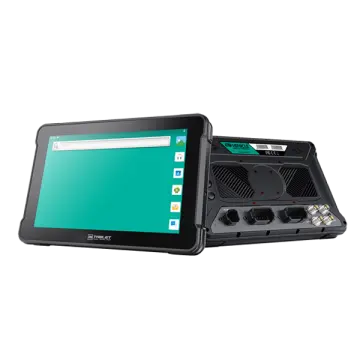
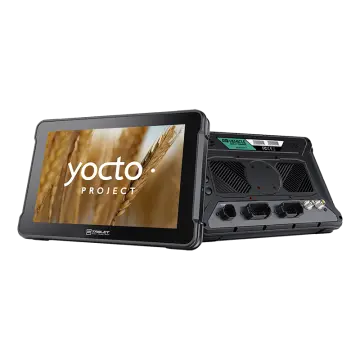
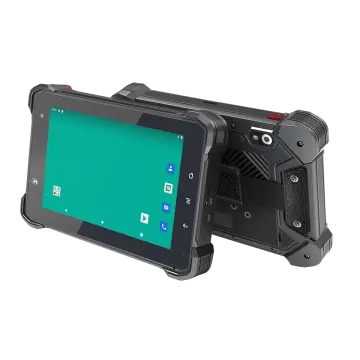
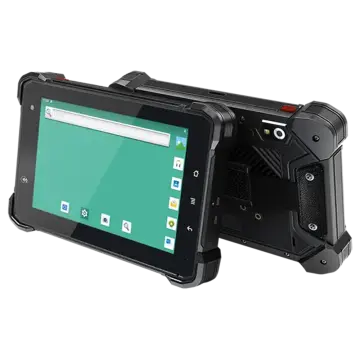
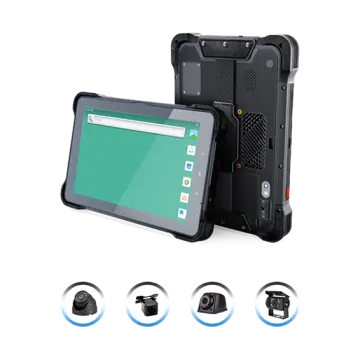
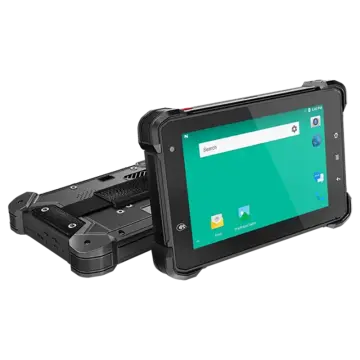
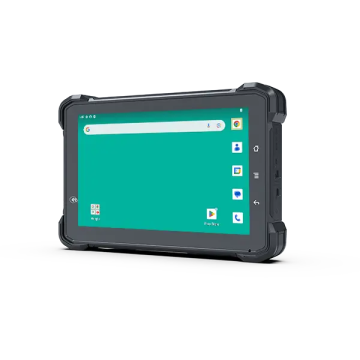
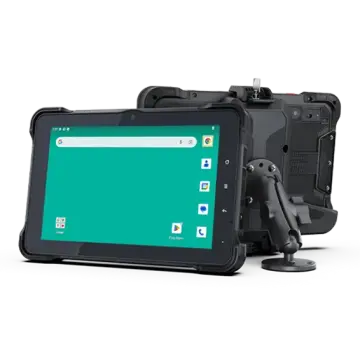
Industrial Android Tablet For Autonomous Driving Test

Mission-Critical Edge Computing, Real-Time CAN Bus Interfacing, RTK Precision & Rugged Telematics Validation for Level 2+ to Level 5 Autonomous Systems

Industrial Android Tablets in the Autonomous Driving Landscape

The Paradigm Shift in Autonomous Vehicle (AV) Test & Validation

As the automotive and mobility industries accelerate their transition from Advanced Driver Assistance Systems (ADAS L2/L2+) toward fully autonomous driving architectures (Level 3 to Level 5 robotaxis, autonomous haulage, automated agricultural equipment, and unmanned delivery pods), the testing paradigm has expanded significantly. Field operational testing (FOT) and real-world road trials require persistent, deterministic, and highly accessible Human-Machine Interfaces (HMI) combined with edge computing data visualizers.

Consumer-grade tablets and standard office laptops routinely fail under the rigorous physical and computational demands of continuous vehicular testing. In contrast, an Industrial Android Tablet for Autonomous Driving Test acts as the central cockpit node. It bridges the critical communication gap between deep vehicle hardware layers (CAN FD, J1939, Ethernet, RS232/485) and the safety test engineers monitoring sensor perception, trajectory planning, and safety override protocols.

Why Android for AV Testbeds?

Modern Android combines a lightweight, sandboxed OS framework with open NDK/HAL development, enabling custom low-latency graphical UIs, real-time ROS (Robot Operating System) bridge apps, multi-camera streaming displays, and rapid cloud-to-edge synchronization over high-speed 4G/5G networks.

Deep Scenario Analysis: Where Industrial Tablets Power AV Testing

🛰️

1. Ground Truth RTK Positioning & Trajectory Verification

Autonomous driving evaluation requires comparing the ego-vehicle's estimated location against sub-centimeter ground truth. Rugged tablets integrated with high-precision RTK (Real-Time Kinematic) GNSS modules and external antenna arrays visualize drift, lane departure offsets, and real-time kinematic accuracy directly inside the test cabin.

🔌

2. CAN Bus Telemetry & Actuator Health Auditing

Through native isolated CAN bus interfaces (supporting ISO 11898, SAE J1939, and CANopen), industrial Android tablets parse raw ECU telemetry in real time. Test engineers observe drive-by-wire steering angles, brake line pressures, throttle responses, and electronic gear commands instantaneously.

👁️

3. Multi-Sensor Perception & AI Camera Feed Monitoring

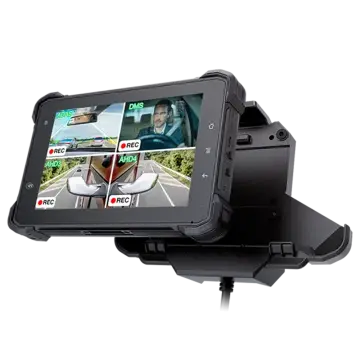
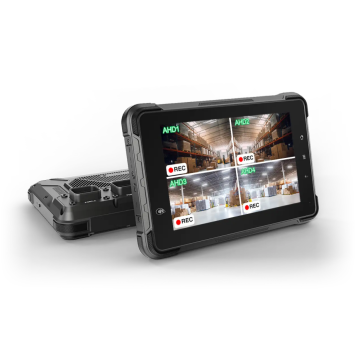
Equipped with hardware-accelerated video decoding and AHD/IP camera inputs, the tablet serves as a real-time viewfinder for LiDAR point-cloud bounding boxes, radar track clusters, and camera object classification overlays, verifying that the perception pipeline recognizes edge-case obstacles.

🛡️

4. Safety Driver HMI & Disengagement Recording

During public-road autonomous trials, safety operators need an immediate, high-visibility dashboard to confirm system confidence levels. The industrial tablet provides one-touch tactile buttons, event-tagging interfaces, and instantaneous manual disengagement logging linked to timestamped cloud logs.

🚜

5. Off-Highway & Precision Ag Autonomous Proving Grounds

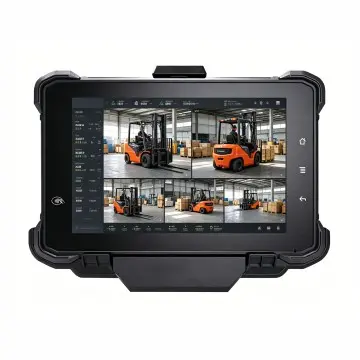
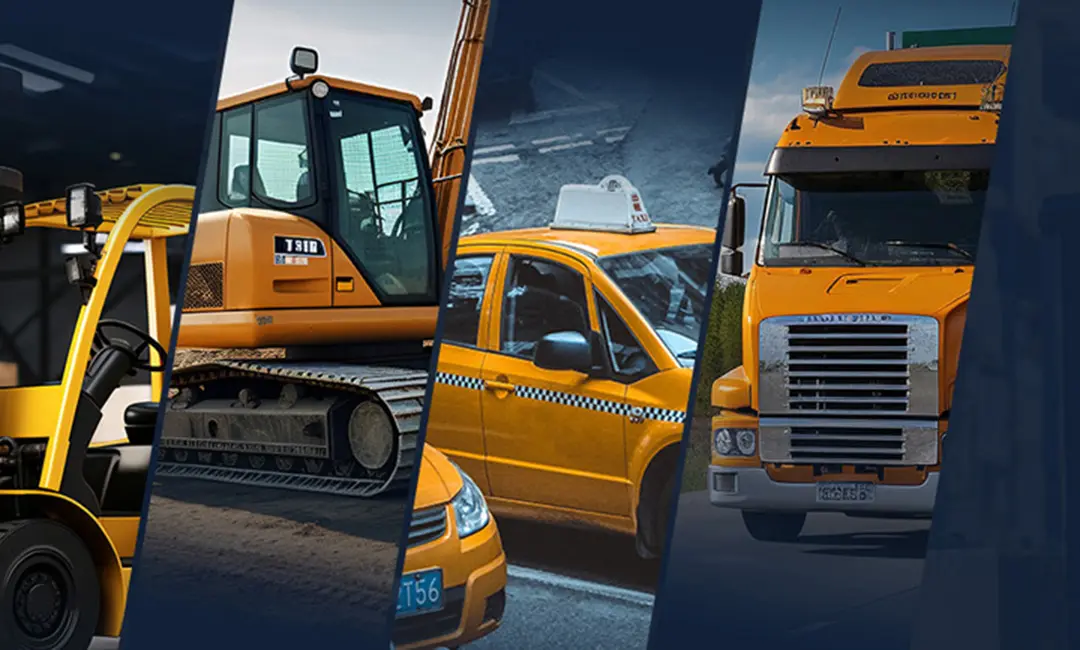
Autonomous tractors, mining haul trucks, and automated forklifts face extreme environmental shock, mud, and dust. IP67-rated tablets resist severe vibrations (MIL-STD-810G/H compliant) while managing automated row navigation, implement control, and ISO-Bus telemetry.

🌐

6. V2X Field Trials & Teleoperation Interfacing

For remote vehicle guidance and 5G-V2X direct communication testing, the tablet acts as an edge gateway, running low-latency WebRTC streams, validating Signal Phase and Timing (SPaT) messages, and providing fallback teleoperation controls during remote navigation experiments.

Engineering Benchmark: Industrial Android Tablet vs. Consumer Devices

A side-by-side engineering evaluation demonstrating why purpose-built in-vehicle terminals are mandatory for automotive testing environments.

Parameter / Feature Industrial Android Vehicle Tablet (3Rtablet) Commercial Consumer Tablet Standard Rugged Laptop
Power Input & Ignition Sensing Wide 9V-36V DC with ISO 7637-2 transient suppression & ACC ignition logic 5V/9V USB-PD (Zero ignition control, battery puffing risk) 19V DC brick; bulky inverters needed; no vehicle ignition link
Automotive Interfaces Native CAN Bus (J1939/CANopen), GPIO, RS232, RS485, RJ45 Ethernet None (Requires brittle external USB-to-CAN converters) Requires external dongles, ribbon cables, and loose hubs
Thermal Resilience -20°C to +70°C Operating Range without thermal throttling 0°C to 35°C (Frequent auto-shutdown in hot vehicle cabins) 0°C to 40°C (Active fans suck in dust and vehicle exhaust)
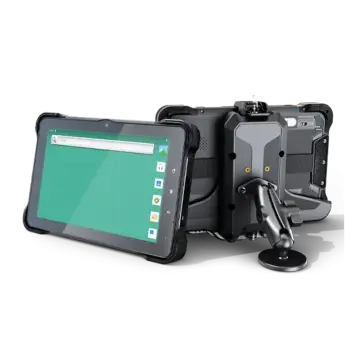
Mounting & Vibration Proofing Standard VESA/RAM mount with high-retention locking pogo-pin dock Suction cups prone to detachment under high-G braking Unsecured passenger seat hazard; cumbersome mounting brackets
Optical Performance 700 to 1000+ nits sunlight readable, anti-glare, wet/glove touch 300-450 nits; heavy reflection; fails with glove touch Variable; clumsy form factor for driver-reach touch control
Lifecycle & OS Customization 5-7+ years embedded availability, BSP source, Root/MDM control 1-2 years rapid obsolescence; forced OS upgrades breaking APIs 3-4 years; heavy OS overhead; frequent background updates

3Rtablet is a globally leading rugged tablet manufacturer

Technology-based, market-oriented, innovative enterprise that develops and manufactures rugged Internet of Vehicles (IOV) terminals and IOT system solutions. With more than 18 years of professional experience, 3Rtablet has cooperated with many top brand telematics solution providers around the world, and the products are widely recognized for their stable performance and professional technical support.

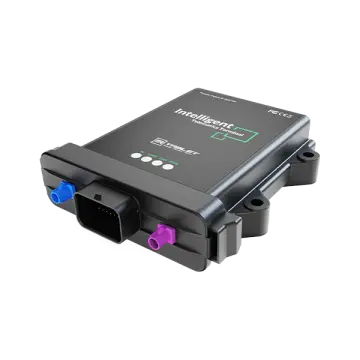
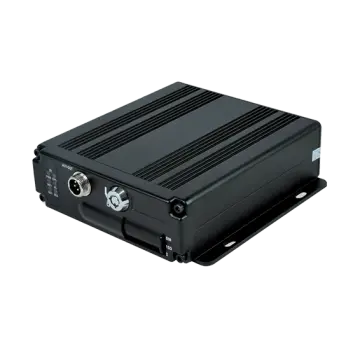
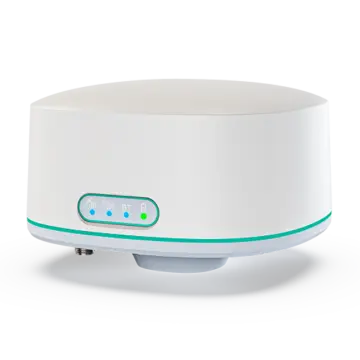
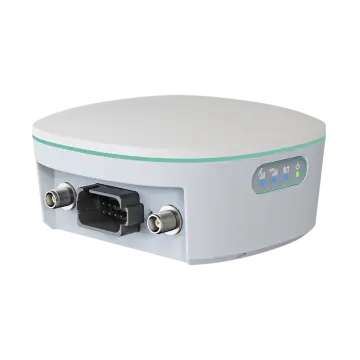
The main products include IP67 rugged tablets, MDM Rugged Device, Intelligent Vehicle Telematics Terminal, and RTK Base Station and Receiver, On-board Computers, Mobile Data Terminal, Agriculture display, Vehicle-mounted Tablets, AHD Camera Integrated Tablets, IP67/IP69K Android telematics boxes, MDVR and AI Dashcam. AI algorithmic vehicle video surveillance and recording technology and comprehensive IoT solutions for a wide range of fleet management application, including ELD/HOS in trucks, construction equipment, mining, forklift safety, taxi dispatch, agriculture precision, intelligent transportation systems, etc. Offering OEM/ODM services, we customize products to meet specific needs.

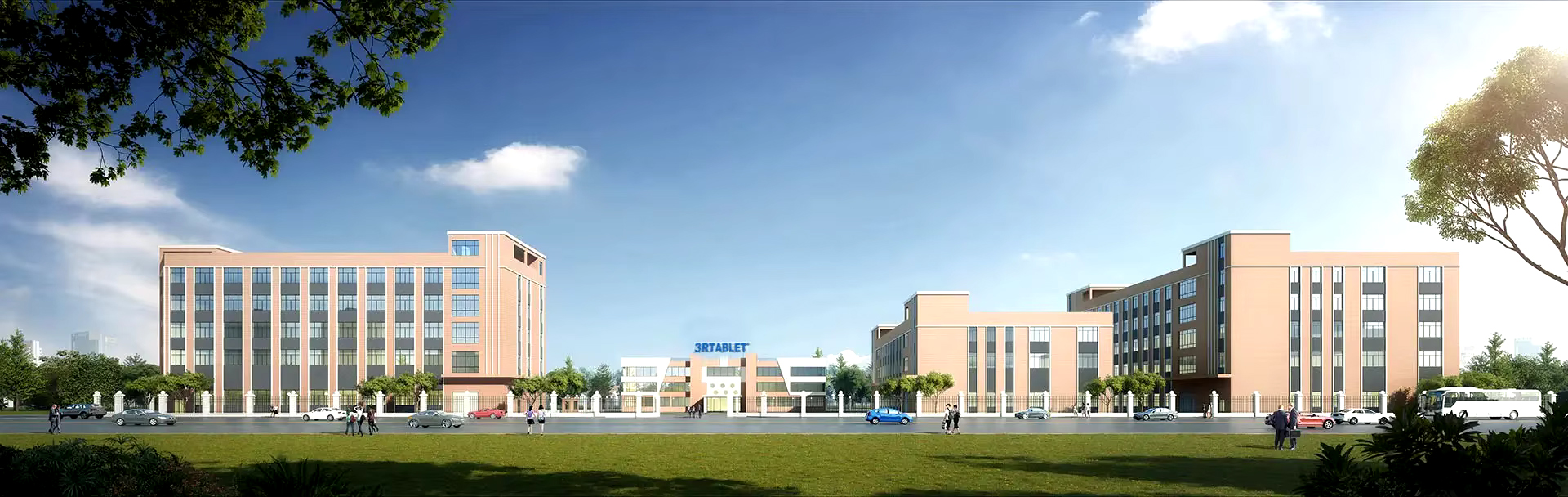
About 3Rtablet Industrial Rugged Vehicle Tablet Manufacturing Base
18+ Years
Of Production & Engineering Experience

Key Hardware Architectures for AV Test Engineering

Qualcomm & NXP High-Performance SoCs

Our in-vehicle tablets are powered by cutting-edge Qualcomm octa-core and NXP industrial-grade silicon platforms, providing rich computational bandwidth for concurrent multi-threaded telemetry parsing, HMI rendering, and on-device AI computer vision inference.

  • Dedicated DSP & NPU engines for edge inference
  • Ultra-low power sleep states with ACC ignition wakeup
  • Long-term supply availability and stable kernel branch support

Automotive-Grade Physical Interfaces

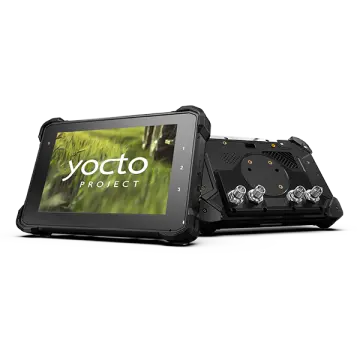
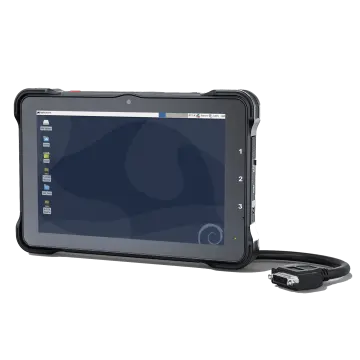
Vehicle test harnesses demand durable physical connectivity. 3Rtablet terminals feature rugged screw-locking breakout cabling and robust multi-pin cradle connectors supporting diverse protocols.

  • Isolated Dual CAN Bus (CAN 2.0B / CAN FD compliant)
  • High-speed RS232, RS485 & configurable GPIO pins
  • 10/100/1000M M12 or RJ45 Ethernet ports for LiDAR/Camera sync

Comprehensive Vehicle Power Protection

In-cabin electrical environments are notorious for voltage drops and spikes during engine ignition and heavy inductive switching. Our hardware integrates robust power conditioning circuitry.

  • Compliant with ISO 7637-2 and ISO 16750-2 standards
  • Over-voltage, reverse-polarity & load dump protection
  • Integrated smart battery backup preventing abrupt data loss

Our Advantage

3Rtablet R&D team with more than 18 years field experience to do technical support, and has been ready to support you in building professional solutions in specific markets.

Regions We Serve - Global Footprint

Regions We Serve

3Rtablet has served customers among more than 70 countries in North America, Europe, Latin America, Oceania, Africa, and the Asia Pacific region.

Industries We Related - Diverse Telematics Sectors

Industries We Related

Fleet Management, Precision Agriculture, Mining, Taxi Dispatch, Forklift Safety, Construction, Public Transportation, Heavy Machinery & Trucks, Crane, Waste management, Vehicle trackings and Emergency Response Solutions etc.

Service We Provide - OEM and ODM Solutions

Service We Provide

3Rtablet's Hardware devices are mainly powered by NXP, Qualcomm, TI solutions. Functional requirements, Hardware test-bed evaluation, Schematic diagram design, Brand requirements - for more requirements, please refer to OEM/ODM service.

// OUR BUSINESS // Our Value

3Rtablet follows innovative technologies, complete solutions, friendly products, excellent quality, and professional services to continuously improve product quality and customer satisfaction, delivering customers with Rugged, Reliable, and Ready Internet of Vehicle (IOV) devices. 3Rtablet has three core values at the heart of its operation: We are ‘Sincere’, we ‘Share’ and always strive for ‘Success’ with our business partners.

Future Trends: Next-Generation In-Vehicle Test Platforms

📡

Direct 5G NR & C-V2X Telematics

As cooperative intelligent transport systems (C-ITS) mature, future test tablets will natively embed high-speed 5G sub-6GHz and C-V2X direct radio links (PC5 interface) to test direct road-side unit (RSU) message exchange and remote cloud arbitration in real time.

🧠

On-Device AI Scenario Injection

Embedded neural processing will allow in-vehicle tablets to run automated scenario generators directly inside the cabin during road tests, dynamically injecting synthetic sensor anomalies or GPS spoofing scenarios to validate fallback safety logic.

🔐

Zero-Trust Vehicle Cybersecurity

In accordance with ISO/SAE 21434, upcoming test platforms incorporate hardware root of trust, encrypted storage partitions, and secure CAN message authentication (SecOC) to protect AV test logs and proprietary algorithmic builds from interception.