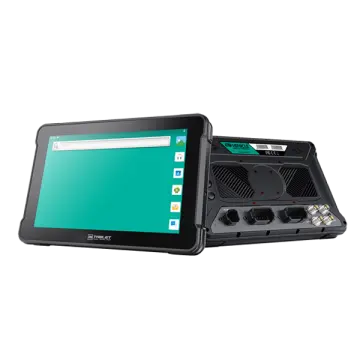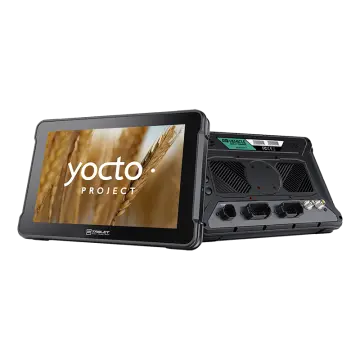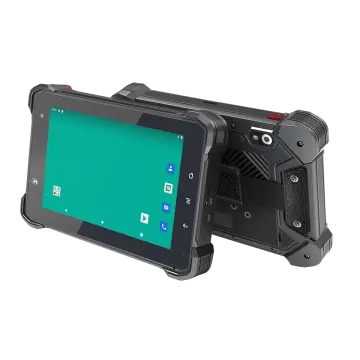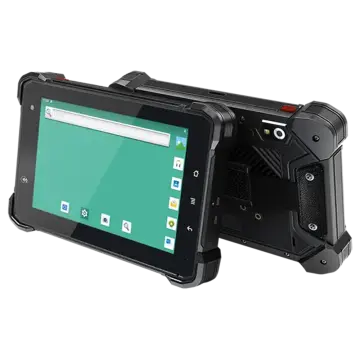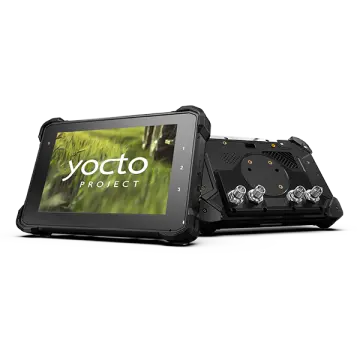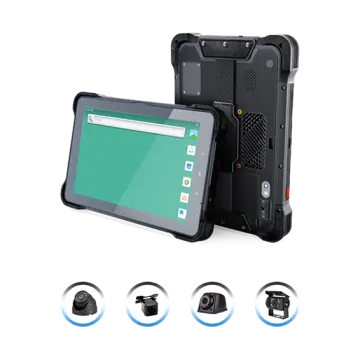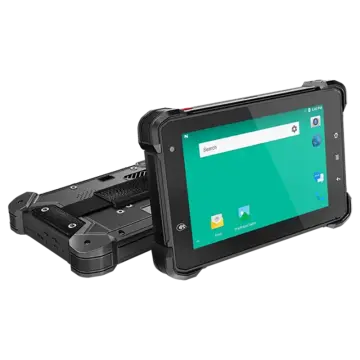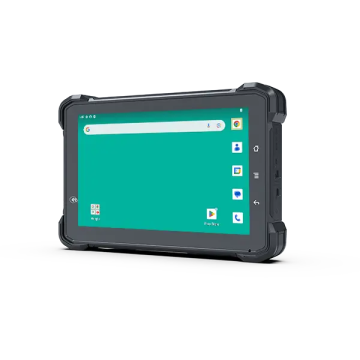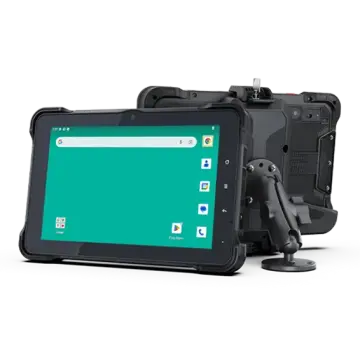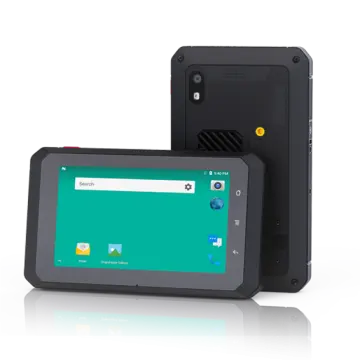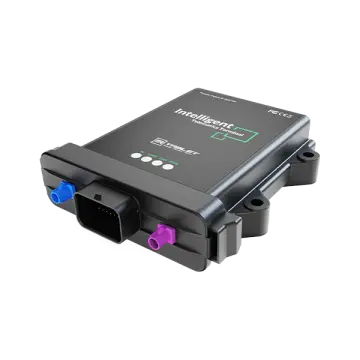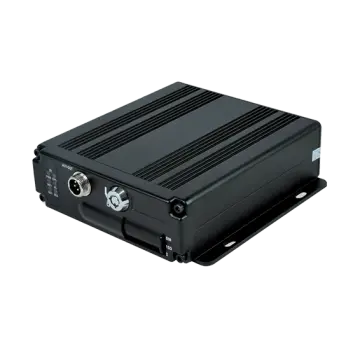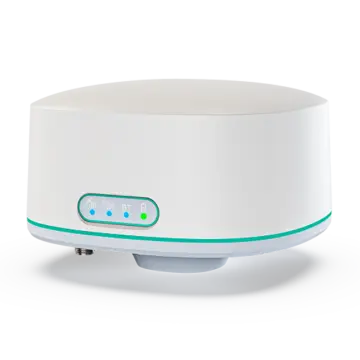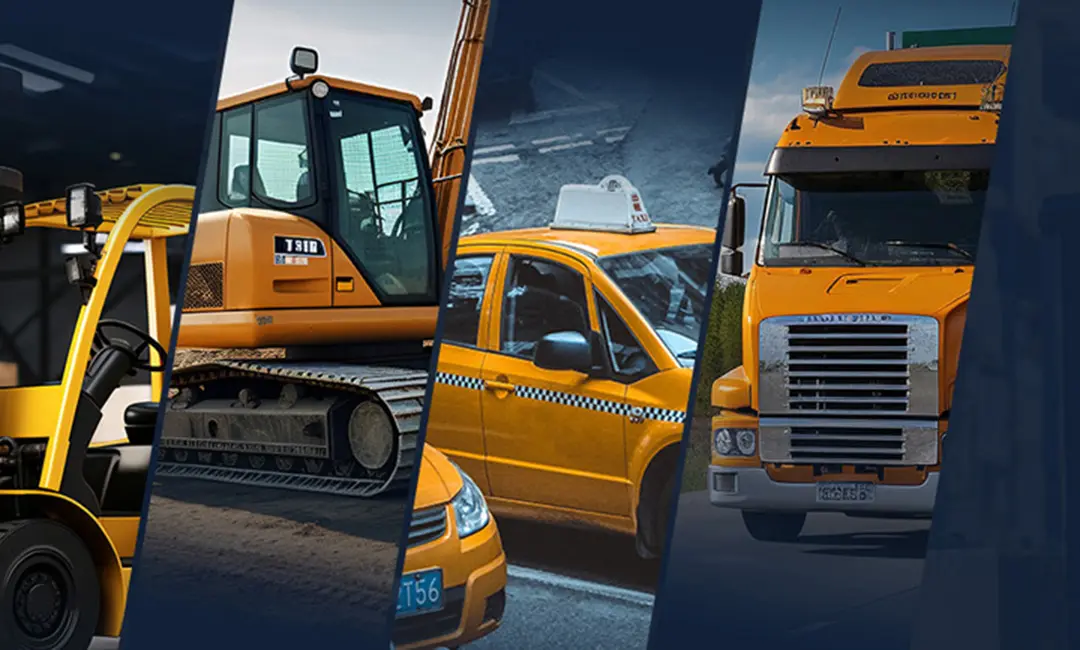
Explore our flagship rugged Android vehicle terminals purpose-built for continuous in-cab telemetry, real-time driver navigation, and seamless fleet management.
Why global ride-hailing operators and municipal taxi fleets are rapidly replacing consumer-grade smartphones with industrial-grade Android vehicle tablets.
In the modern urban mobility sector, taxi dispatching has evolved far beyond simple two-way radio communication or basic GPS routing. Today's commercial taxi fleets operate as high-density mobile data nodes within smart city infrastructures. Historically, many fleet operators attempted to deploy off-the-shelf consumer tablets or smartphones to run dispatch software. However, field data consistently demonstrates that consumer-grade devices suffer catastrophic failure rates when subjected to 24/7 commercial taxi environments.
Inside a working taxi, dashboard temperatures can surge past 70°C under direct summer sunlight and plummet below -20°C during harsh winter nights. Consumer lithium-ion batteries swell, degrade, or pose severe thermal runaway risks under constant charging cycles. Furthermore, relentless mechanical vibration from uneven city roads loosens internal solder joints and damages fragile USB charging ports, leading to unexpected communication blackouts, missed passenger bookings, and costly fleet downtime.
Deploying a dedicated Tablet Industrial Android For Taxi Dispatching directly eliminates these operational bottlenecks. Engineered from the ground up with automotive-grade power management, wide-temperature tolerance, and industrial docking stations, rugged Android terminals deliver lower Total Cost of Ownership (TCO) and uninterrupted dispatch continuity across multi-year service lifecycles.
Modern municipal transportation authorities and commercial fleet managers face strict regulatory compliance, intense competition from ride-hailing aggregators, and rising insurance premiums. An industrial Android Mobile Data Terminal (MDT) acts as the central nervous system of the vehicle:
Next-generation industrial Android tablets are converging artificial intelligence, centimeter-level positioning, and edge computing into a unified cockpit terminal.
As urban transportation transitions toward connected and autonomous ecosystems, the role of the in-vehicle terminal is expanding exponentially. Fleet operators are no longer merely tracking vehicle locations; they are leveraging real-time edge analytics to optimize fleet utilization, verify driver identity, monitor cabin safety, and automate regulatory compliance. Below are the three foundational technological pillars shaping the future of Tablet Industrial Android For Taxi Dispatching:
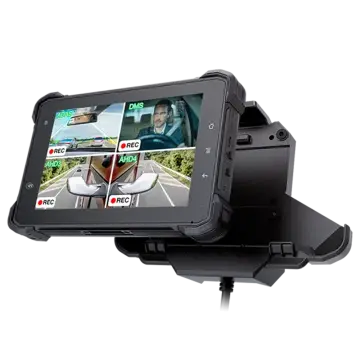
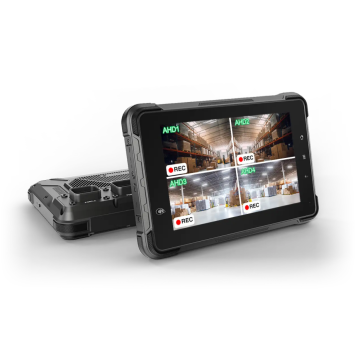
Powered by high-performance Octa-Core Qualcomm and NXP processors with dedicated Neural Processing Units (NPUs), industrial Android tablets now process multi-channel AHD camera feeds directly at the edge. Real-time Driver Monitoring Systems (DMS) detect driver fatigue, smoking, phone distraction, and unauthorized driver swaps via facial recognition, while Advanced Driver Assistance Systems (ADAS) alert drivers to forward collisions and lane departures.
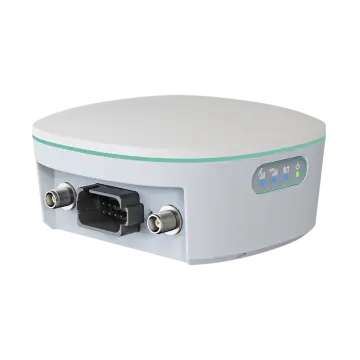
Urban canyons created by dense skyscrapers and underground tunnels severely degrade standard GPS signals, causing inaccurate pickup pins and billing disputes. Industrial Android taxi tablets integrate dual-band GNSS (GPS, GLONASS, Galileo, BeiDou) alongside Inertial Navigation Systems (INS) and Dead Reckoning (UDR) sensors, maintaining accurate lane-level tracking even when satellite visibility is temporarily obstructed.
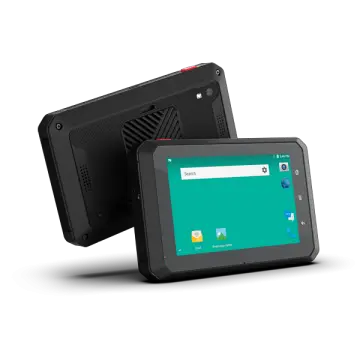
Modern Android 12 and Android 13 industrial tablets certified by Google Mobile Services (GMS) ensure full compatibility with global mapping APIs, cloud dispatch suites, and over-the-air (OTA) security patches. Paired with 10F super-capacitor technology instead of volatile chemical batteries, fleets achieve unprecedented thermal safety and instant ignition-sense wake/sleep automation.
How customized industrial Android terminals transform daily operations across diverse passenger transport verticals.
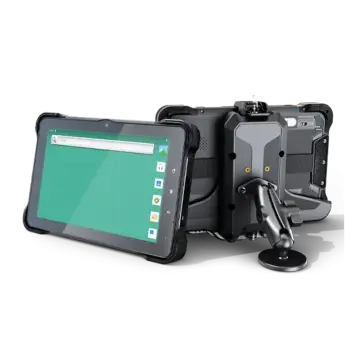
In high-volume metropolitan taxi operations, every second of idle cruising wastes fuel and reduces driver earnings. Mounted securely via a quick-release vehicle docking station, the 7-inch or 10-inch industrial Android tablet maintains persistent 4G LTE/5G connectivity with cloud dispatch servers. When a passenger books a ride via mobile app or call center, the terminal instantly calculates proximity, traffic density, and driver shift status to assign the optimal vehicle.
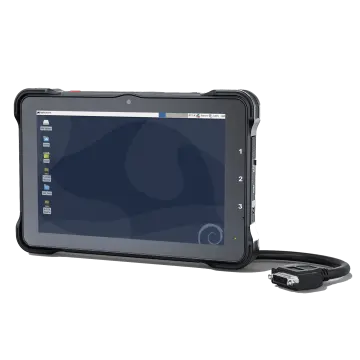
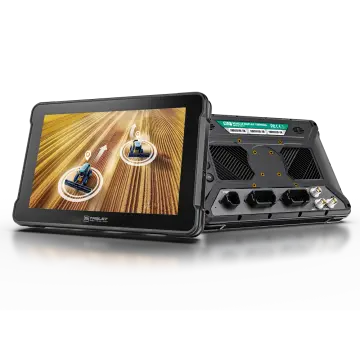
Through RS232/CAN interfaces, the tablet communicates directly with the physical taximeter and roof LED sign. The moment a driver accepts an e-hailing order or engages the meter for a street hail, the roof dome light automatically switches from "VACANT" to "HIRED," preventing double-booking conflicts and streamlining curbside passenger pickup.
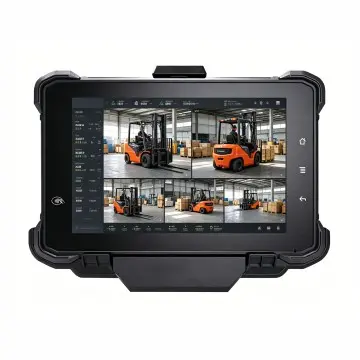
Driver and passenger safety is a top priority for municipal transport regulators worldwide. By deploying an AHD Camera Integrated Tablet, the dispatch screen doubles as a Mobile Digital Video Recorder (MDVR). Up to four high-definition cameras—covering the front road, driver cabin, rear passenger seat, and luggage trunk—feed synchronized video streams directly into the tablet.
In the event of a fare dispute, medical emergency, or security threat, the driver can press a discreet physical or on-screen SOS button. The industrial Android terminal immediately transmits live cabin audio/video streams and exact GNSS coordinates to the central dispatch command center and local law enforcement, while simultaneously locking event footage onto tamper-proof storage.
As taxi fleets rapidly electrify to meet zero-emission mandates, managing battery health and charging schedules becomes critical. Connected directly to the vehicle's OBD-II or J1939/CAN Bus port, the industrial Android tablet reads real-time diagnostic trouble codes (DTCs), state of charge (SoC), tire pressure, and energy consumption metrics.
When an electric taxi's battery drops below a predefined threshold, the dispatch software automatically routes the vehicle toward available fast-charging stations and filters out long-distance airport trips that exceed remaining range. Furthermore, built-in 3-axis accelerometers monitor harsh braking, rapid acceleration, and sharp cornering, coaching drivers toward smoother, safer, and more energy-efficient driving habits.
Modern commuters expect frictionless, cashless payment experiences. Equipped with integrated NFC/RFID readers, Bluetooth 5.0, and dual-band Wi-Fi, industrial Android terminals support instant tap-to-pay transactions via credit cards, transit cards, and mobile wallets, as well as dynamic QR code payments displayed directly on the high-brightness screen.
For executive chauffeur services, airport shuttles, and paratransit fleets, 10-inch rugged tablets can also be mounted in the rear headrest area. Operating in secure dual-screen or passenger kiosk mode, riders can view real-time flight statuses, track their route ETA, adjust cabin climate controls, and receive digital tax receipts automatically via email or SMS.


When specifying hardware for a large-scale taxi dispatch deployment, system integrators and telematics service providers (TSPs) must evaluate several critical engineering parameters to ensure long-term ROI:
1. Screen Size & Cockpit Ergonomics: For compact urban sedans with limited dashboard space, a 5-inch or 7-inch rugged Android terminal prevents windshield obstruction while providing ample touch area for order acceptance and navigation. For larger multi-purpose vehicles (MPVs), executive shuttles, or fleets utilizing quad-split AHD camera views, a 10-inch rugged vehicle tablet offers superior visual clarity and multi-window multitasking.
2. Environmental & Mechanical Certification: Always verify that the device meets IP65 or IP67 ingress protection against dust and spilled beverages, alongside MIL-STD-810G/H vibration and shock standards. Furthermore, custom POGO-pin docking stations with key-lock mechanisms allow drivers to easily undock the tablet for vehicle inspections while deterring opportunistic theft during street stops.
3. Deep OEM/ODM Customization: Every taxi market has unique regulatory mandates—ranging from specific fiscal taximeter protocols in Europe to mandatory driver ID card readers and emergency panic buttons in North America and Asia. Partnering directly with an experienced manufacturer like 3Rtablet enables custom boot logos, tailored OS firmware builds, custom aviation cable harnesses, and specialized I/O port configurations.
Browse our full lineup of rugged Android vehicle-mounted tablets, super-capacitor terminals, and GMS-certified fleet displays ready for global OEM/ODM deployment.