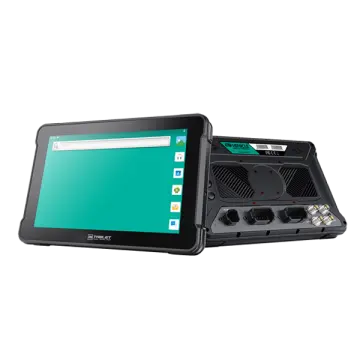
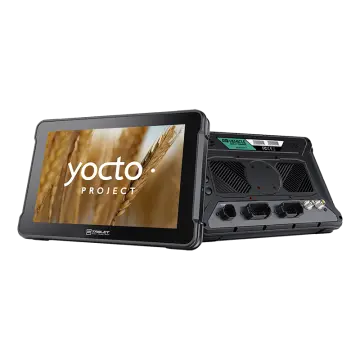
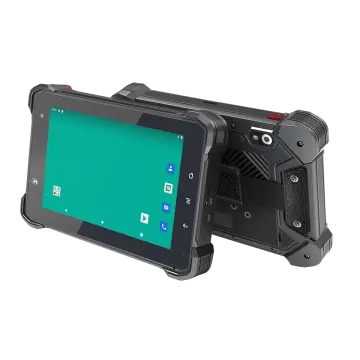
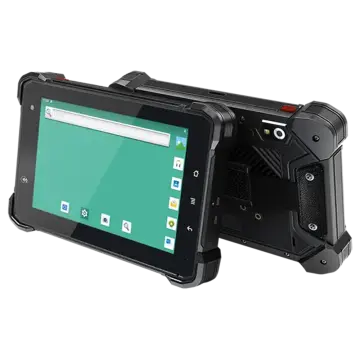
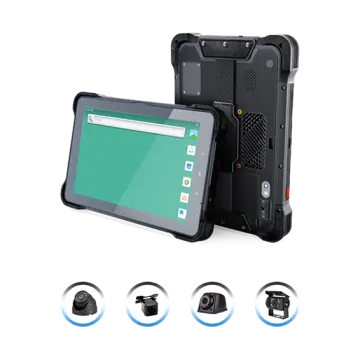
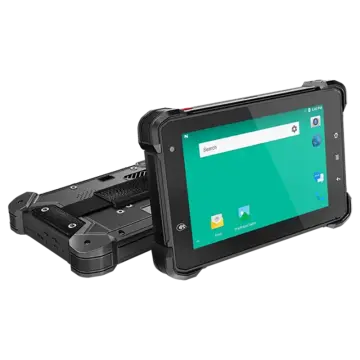
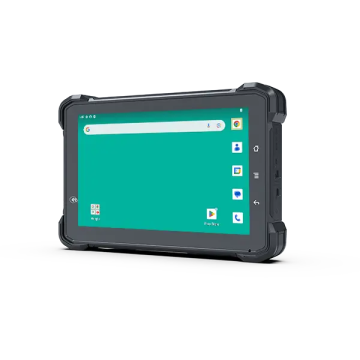
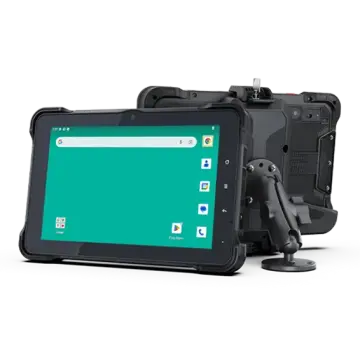
Engineered with 1000 Nits ultra-high brightness, rugged IP67 sealed enclosures, and vehicle CANBus connectivity to drive flawless Warehouse Management System (WMS) field operations.
How cutting-edge intralogistics ecosystems deploy 1000 Nits optical bonded vehicle-mounted terminals to eradicate operational blind spots, reduce order cycle latency, and safeguard workforce safety.
The modern intelligent warehouse has undergone a dramatic evolutionary shift over the past decade. Propelled by exponential e-commerce proliferation, omnichannel fulfillment demands, tight delivery timeframes, and acute global labor constraints, logistics centers have transformed from passive pallet storage depots into sophisticated, automated cyber-physical ecosystems. Material handling equipment—predominantly electric counterbalanced forklifts, reach trucks, order pickers, side-loaders, and Autonomous Mobile Robots (AMRs)—no longer operate in isolation. They serve as digitized node terminals within broader Supply Chain Execution (SCE), Warehouse Management Systems (WMS), and Warehouse Control Systems (WCS) frameworks.
Within this dynamic intralogistics operational loop, the vehicle terminal functions as the vital human-machine interface (HMI) bridging the physical operator and enterprise enterprise data flow. However, standard consumer-grade tablets and low-brightness industrial monitors consistently fail to withstand the uncompromising realities of modern fulfillment facilities. Forklifts continuously transition between cavernous dimly lit interior high-bay racking systems and brightly sunlit outdoor loading docks, cross-docking open canopies, and container staging yards. Ambient daylight in open staging areas frequently eclipses 10,000 to 50,000 lux, rendering standard 300-to-400 nit screens entirely unreadable due to severe washouts and reflections.
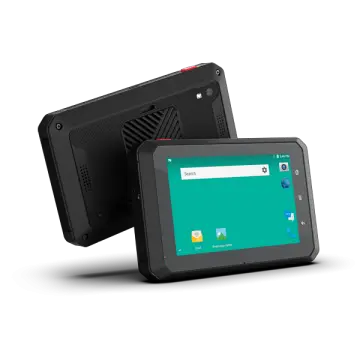
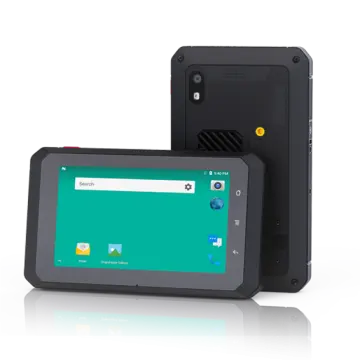
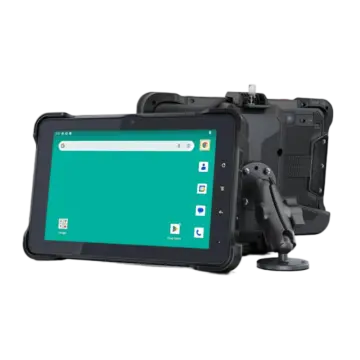
Deploying a 1000 Nits Vehicle Rugged Tablet Android eliminates this vulnerability entirely. By pairing an intense 1000 cd/m² luminance panel with specialized anti-glare (AG) surface etching and direct optical bonding technology, operators obtain pristine, razor-sharp readability under direct equatorial sun glare as well as under overhead LED high-bay luminaires. Coupled with the agility, security, and expansive development ecosystem of the modern Android enterprise operating system, these high-brightness vehicle-mounted computers (VMCs) have become foundational architecture for Industry 4.0 logistics hubs globally.
High-brightness optical-bonded panel prevents screen washout at outdoor cross-dock platforms, loading gates, and container yards, ensuring zero-latency legibility for critical picking instructions.
Integrated wide-input DC power circuitry with ISO 7637-2 transient spike protection accommodates fluctuating forklift battery voltages, delivering seamless auto-power synchronization upon key ignition.
Complete hermetic sealing against aerosolized pallet dust, high-pressure washdowns, continuous multi-axis mechanical vibration, and deep sub-zero condensation inside cold storage chambers.
Commercial warehouse managers face mounting pressure to accelerate picking rates, achieve 99.9% inventory sorting accuracy, and minimize equipment downtime. Historically, legacy vehicle-mounted terminals ran proprietary, closed, or outdated Windows CE / Mobile operating systems. As Microsoft terminated extended support for legacy embedded platforms, global supply chain operators accelerated their migration toward Google Android Enterprise. Android offers unmatched application development flexibility, seamless compatibility with contemporary cloud WMS software (such as SAP EWM, Manhattan Associates, Blue Yonder, and Oracle NetSuite), and superior Mobile Device Management (MDM) deployment capabilities.
Nonetheless, operating an Android tablet mounted securely on a 3-ton material handling forklift presents harsh technical hurdles that off-the-shelf commercial tablets simply cannot survive:
Exploring how 1000 Nits Android Rugged Tablets optimize material handling productivity across diverse warehouse operational zones.
In multimodal distribution hubs, incoming shipments must be unloaded, cross-docked, and staged directly onto outbound transit trailers without entering static rack storage. Forklifts constantly transition from dark trailer beds into intense outdoor apron sunlight.
The 1000 Nits ultra-high-luminance display guarantees that barcode scanning prompts, bay allocations, and yard container management maps remain completely legible without forcing the forklift driver to cup their hand or tilt the screen. Equipped with high-gain GPS/GLONASS/Galileo GNSS modules, these tablets provide real-time yard asset tracking, reducing trailer wait times by up to 35%.
Very Narrow Aisle (VNA) reach trucks operate in tight vertical corridors reaching heights over 15 meters. At these towering elevations, drivers rely on high-precision camera feeds mounted to the mast carriage to locate pallet entry slots accurately.
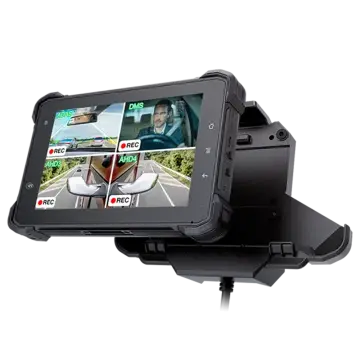
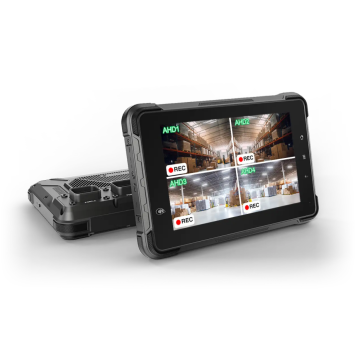
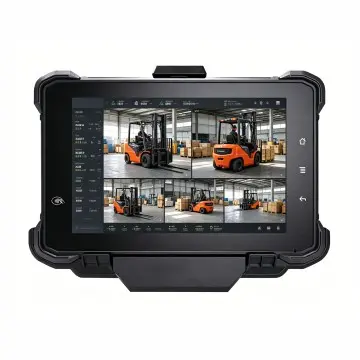
A vehicle-mounted 10.1-inch Android rugged tablet serves a dual purpose: hosting the responsive WMS task list while simultaneously acting as a multi-channel video monitor displaying low-latency AHD camera feeds. Operators execute put-away, high-rack cycle counts, and slot replenishments with millimeter precision without craning their necks, dramatically accelerating picking throughput and preventing rack tip-over disasters.
Refrigerated food processing and pharmaceutical warehousing require non-stop sub-zero environments ranging from 0°C down to -30°C. Standard commercial displays freeze, LCD crystals become sluggish, touchscreens fail to register, and internal condensation ruins internal motherboards upon room-temperature exit.
Industrial-grade vehicle tablets combat this with fully sealed IP67/IP69K enclosures, internal automated screen and motherboard defroster heating elements, and wide-temperature components. Drivers navigate cold rooms without display fogging, screen freeze, or touch failure, maintaining unbroken data integrity across perishable food distribution pipelines.
Material handling safety is paramount. Warehouse vehicle tablets act as intelligent telematics control gateways interfacing directly with the forklift's internal electronic control unit via CANBus J1939 or OBD-II protocols.
Running on Android with dedicated AI NPU computing acceleration, the tablet processes real-time AHD camera streams around the forklift chassis. Deep-learning algorithms instantly classify human workers, pallet jacks, and obstacles, triggering audible cab alarms and visual warning overlays when an individual enters the danger zone. Furthermore, driver behavior monitoring (seatbelt compliance, speed governance, shock impact logging) is recorded and beamed to fleet management dashboards.
Examine the mechanical and electronic innovations required to deliver 24/7 uptime in rigorous intralogistics ecosystems.
Building a rugged tablet capable of enduring the relentless pace of a modern 24/7 logistics hub requires rigorous component-level engineering. A tablet mounted to a counterbalance forklift experiences continuous 3-axis vibrations as it traverses concrete warehouse expansions, docks, and guide rails. Below is a comprehensive breakdown of the core architectural pillars powering 3Rtablet's intelligent warehousing hardware portfolio.
| Key Parameter | 3Rtablet Industrial Rugged Vehicle Tablet | Standard Consumer / Semi-Rugged Tablet |
|---|---|---|
| Display Luminance | 1000 Nits (cd/m²) Optical Bonded with Anti-Glare Etched Glass | 300 - 450 Nits (Unreadable in outdoor dock sunlight / high-glare LED) |
| Touch Technology | Multi-point Projected Capacitive (G+G), Wet-Touch, Palm Rejection & Glove Mode | Standard capacitive touch (Erratic behavior with wet hands or thick gloves) |
| Input Voltage Range | DC 8V ~ 36V Wide Input with ISO 7637-2 surge & reverse polarity protection | Fixed 5V/9V USB-PD (Requires fragile external step-down converters prone to failure) |
| Vehicle Ignition Sense | Integrated Hardware ACC Ignition Sense (Auto-wake / delay-shutdown management) | None (Requires manual power-button pressing by busy operators) |
| Ingress Protection | Full IP65 / IP67 Dust-tight, high-pressure water and vapor resistance | IP52 or IP54 (Susceptible to pervasive cardboard dust, moisture and splashes) |
| Shock & Vibration | MIL-STD-810H & ISO 16750-3 compliant for severe heavy machinery vibration | Consumer rating (Internal solder fatigue and connector disconnections under shock) |
| Vehicle Bus & I/O | Isolated CANBus (J1939, CANopen), RS232, RS485, GPIO, USB Type-A, Multi-CH AHD | Consumer USB-C only (No native vehicle telemetry or industrial serial bus) |
| Roaming Wireless | Wi-Fi 5 / Wi-Fi 6 with seamless 802.11k/r/v fast roaming & dual SIM 4G/5G failover | Standard consumer Wi-Fi (Suffers 3-5 second disconnects when roaming across APs) |
Merely increasing the backlight LED power to reach 1000 Nits is insufficient if the display panel assembly suffers from internal reflections. Traditional displays feature an air gap between the outer cover glass and the underlying LCD screen. When light enters from sunlight-flooded warehouse doors, approximately 4.5% of light reflects off the exterior glass surface, and another 4.5% reflects off the top surface of the LCD panel itself. This combined 9% reflective glare destroys contrast ratio, causing screen washouts.
3Rtablet applies optical resin bonding (LOCA/OCA) to permanently eliminate the air gap between the LCD panel and the chemically strengthened cover glass. By harmonizing the index of refraction across the entire optical stack, internal reflections drop to less than 0.2%. As a result, the 1000 Nits high-brightness output punches through direct dock glare with razor-sharp contrast, vivid color saturation, and wide 178° viewing angles. Furthermore, optical bonding enhances physical impact resistance against dropped tools, prevents internal moisture condensation, and eliminates dusting inside the display stack.
Forklift electrical architectures are notoriously unstable. Heavy current draw during mast raising, electric steering engagement, and regenerative brake recovery inject extreme voltage sags and spikes into the vehicle power distribution bus. Standard tablets equipped with basic USB power bricks quickly shut down, trigger brownout resets, or experience fried motherboards.
Our vehicle-mounted tablets incorporate high-efficiency DC-DC buck-boost power regulators supporting wide-input ranges of 8V to 36V DC, fully compliant with automotive ISO 7637-2 and ISO 16750-2 standards. An onboard hardware Ignition Sense (ACC pin) monitors vehicle key status. When the operator turns the key on, the tablet boots automatically; when the key is switched off, the system executes an orderly software shutdown or enters ultra-low-power sleep after a preconfigured delay timer, preventing vehicle battery drain during non-operating hours.
Anticipating the technological convergence reshaping intralogistics: AI-driven Edge Computing, High-Precision RTK Positioning, and Hybrid AMR-Forklift Collaboration.
Modern vehicle tablets now pack embedded Neural Processing Units (NPUs) delivering 2 to 6 TOPS of deep-learning inference. Onboard algorithms process real-time multi-camera feeds for pedestrian posture estimation, blind spot intrusion alerts, and automatic pallet barcode recognition on the fly.
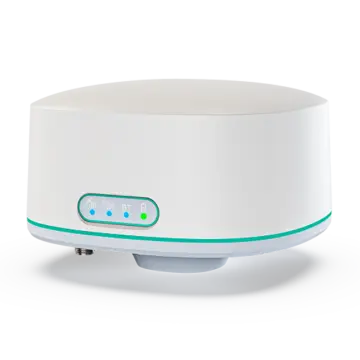
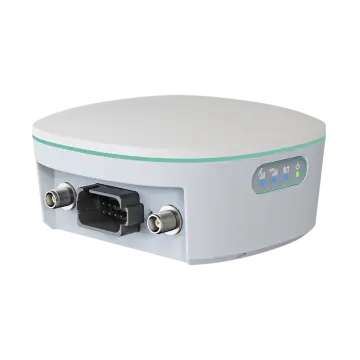
Integrating Real-Time Kinematic (RTK) GNSS receivers into warehouse vehicle terminals enables sub-5cm spatial positioning in outdoor yards. When paired with indoor UWB (Ultra-Wideband) or visual SLAM, terminals know the precise shelf slot and floor coordinate of every pallet movement.
As logistics facilities transition to hybrid operations combining manned reach trucks with Autonomous Mobile Robots (AMRs) and automated forklifts (AGVs), Android vehicle tablets serve as centralized edge orchestration nodes, enabling remote safety interventions and dynamic route reallocations.
Looking ahead toward 2026-2030, warehouse operational velocity will demand zero-latency synchronization between enterprise Enterprise Resource Planning (ERP) databases and physical ground movements. The vehicle terminal is shifting from a simple passive display terminal into an intelligent edge computing gateway. By aggregating CANBus telematics, camera machine vision, driver fatigue monitoring, and pallet RFID scanning, the 1000 Nits Android vehicle tablet acts as the ultimate digital twin sensory node on the warehouse floor.
Technology-based, market-oriented, innovative enterprise that develops and manufactures rugged Internet of Vehicles (IOV) terminals and IOT system solutions. With more than 18 years of professional experience, 3Rtablet has cooperated with many top brand telematics solution providers around the world, and the products are widely recognized for their stable performance and professional technical support.
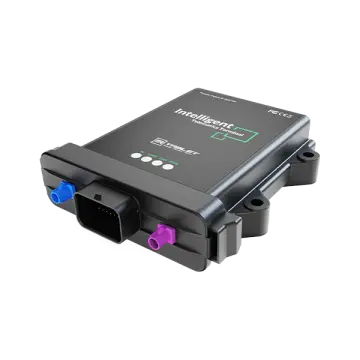
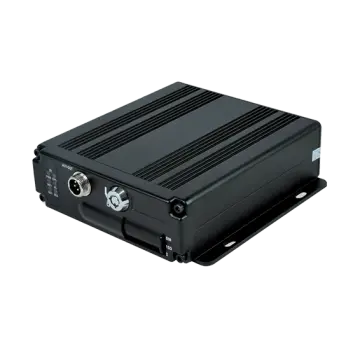
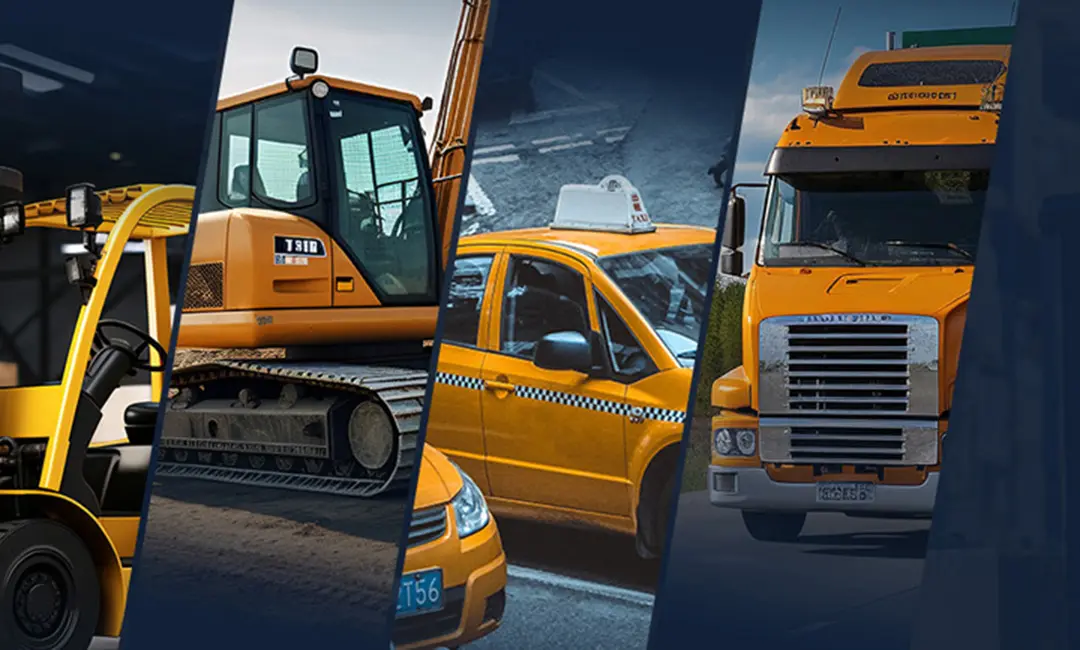
The main products include IP67 rugged tablets, MDM Rugged Device, Intelligent Vehicle Telematics Terminal, and RTK Base Station and Receiver, On-board Computers, Mobile Data Terminal, Agriculture display, Vehicle-mounted Tablets, AHD Camera Integrated Tablets, IP67/IP69K Android telematics boxes, MDVR and Al Dashcam. Al algorithmic vehicle video surveillance and recording technology and comprehensive loT solutions for a wide range of fleet management application, including ELD/HOS in trucks, construction equipment, mining, forklift safety, taxi dispatch, agriculture precision, intelligent transportation systems, etc. Offering OEM/ODM services, we customize products to meet specific needs.
3Rtablet R&D team with more than 18 years field experience to do technical support, and has been ready to support you in building professional solutions in specific markets.
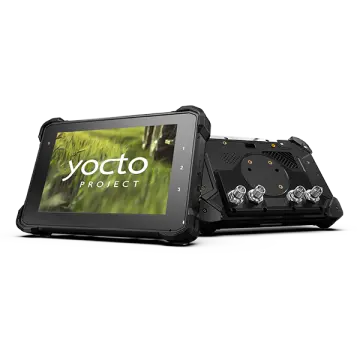
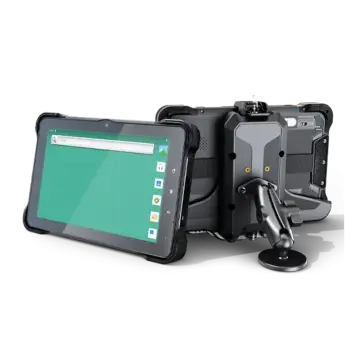
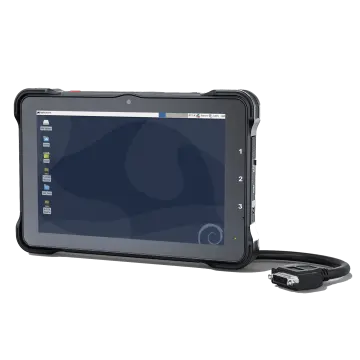
Explore our comprehensive lineup of rugged Android and Linux tablets, mobile DVR telematics boxes, and multi-channel vehicle safety computers designed for demanding industrial operations.