
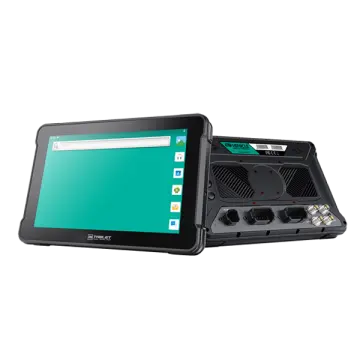
 AT-10A
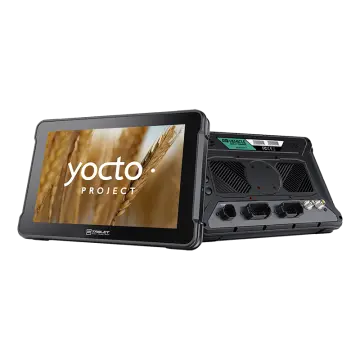 AT-10AL
 VT-7 GA/GE
 VT-7 Pro
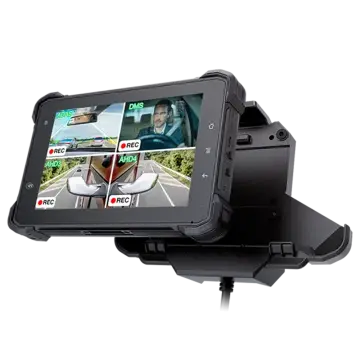 VT-7 PRO (AHD)
 VT-7A
VT-7A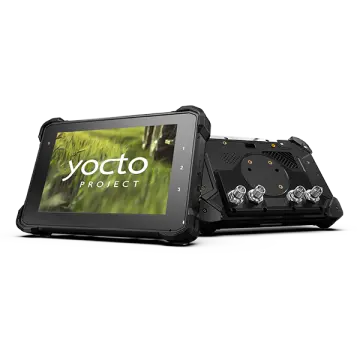 VT-7AL
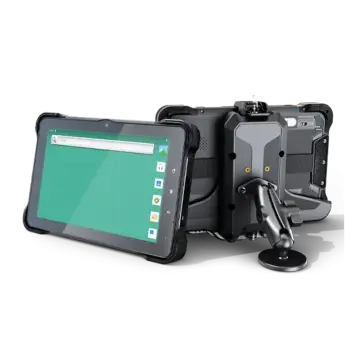 VT-10
VT-10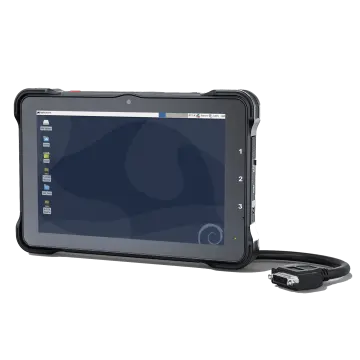 VT-10 IMX
 VT-10 Pro
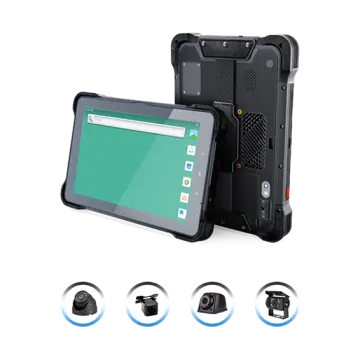 VT-10 Pro AHD
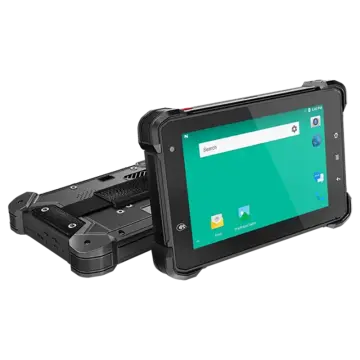 VT-7
VT-7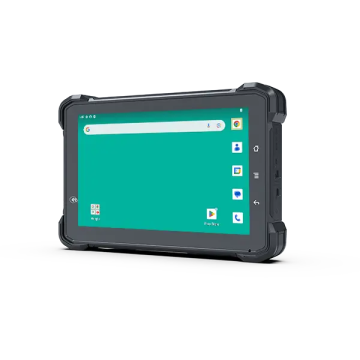 VT-7A PRO
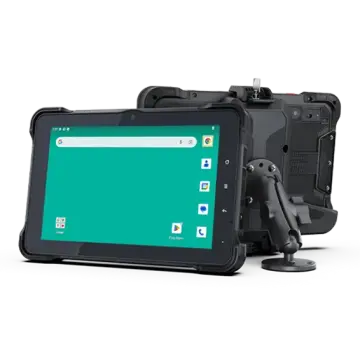 VT-10A Pro
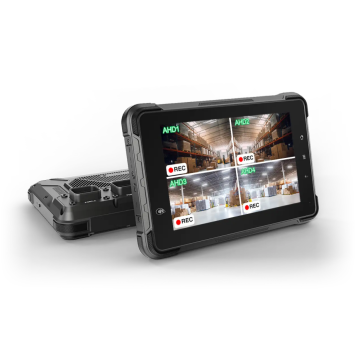 ST-7
ST-7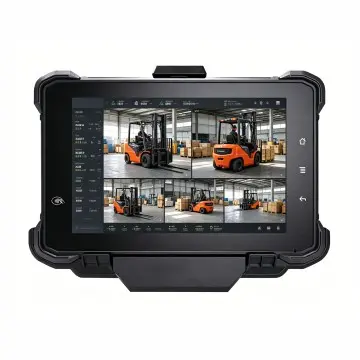 VT-7A PRO AHD
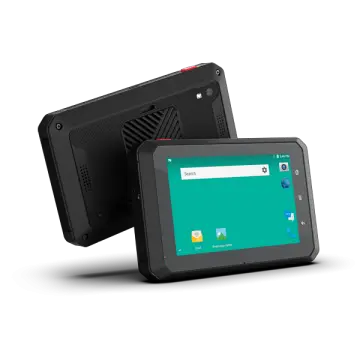 VT-5A
VT-5A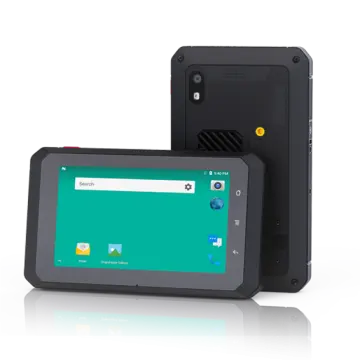 VT-5
VT-5 VT-BOX
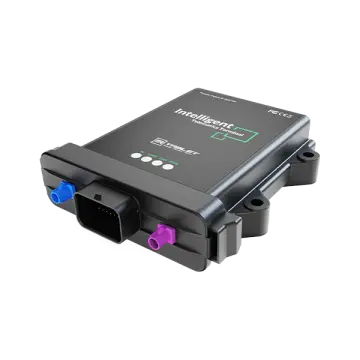 VT-BOX-II
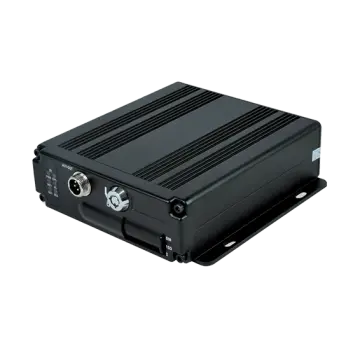 AI-MDVR040
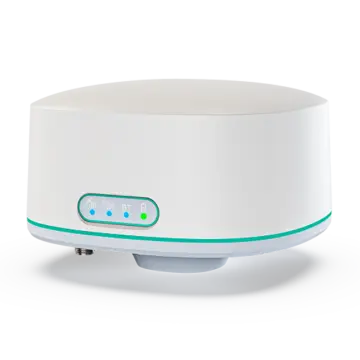 AT-B2
AT-B2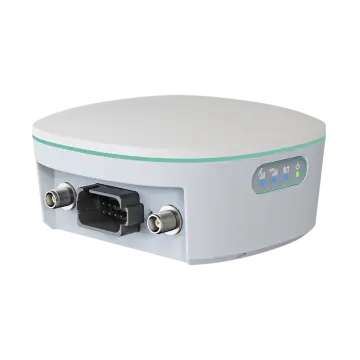 AT-R2
AT-R2
NXP i.MX 8M Mini Linux Tablets: Choosing the Engineering Baseline for Rugged In-Vehicle Computing
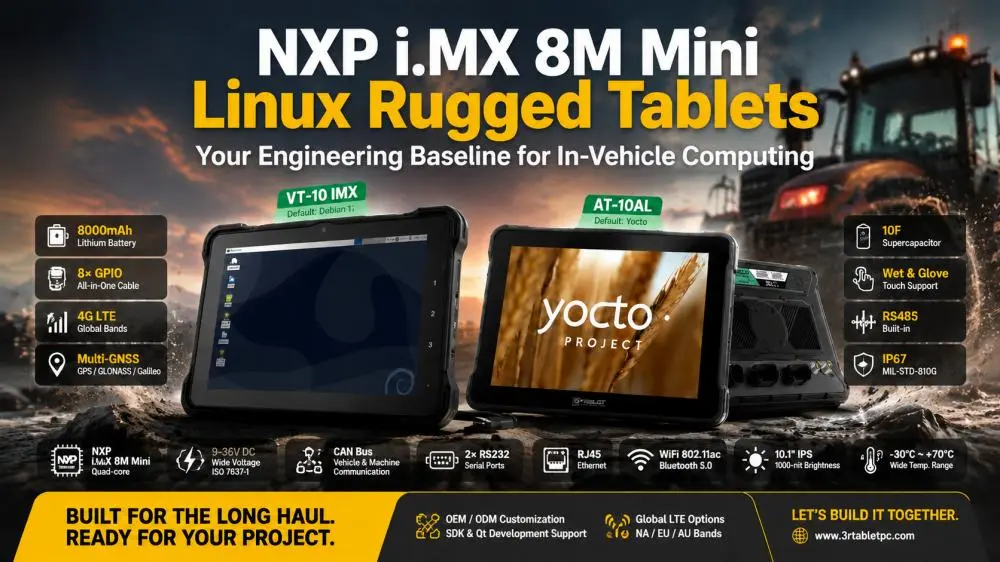
A vehicle that spends its working life on a haul road, in a city bus depot, or at the edge of a planting field does not need a tablet that plays video smoothly. It needs a computer that starts predictably in the cold, tolerates voltage spikes from the starting motor, keeps a fixed I/O set available for a decade, and runs software the owner can actually control. That distinction separates an industrial-grade in-vehicle computer from a mobile device mounted on a dash. We walk through the engineering decisions behind the VT-10 IMX and AT-10AL from 3Rtablet, two 10.1-inch Linux Rugged Tablets built on the NXP i.MX 8M Mini, and explain where the platform choices matter in real deployments.
THE PROCESSOR BASELINE: NXP I.MX 8M MINI AS AN INDUSTRIAL COMPUTING FOUNDATION
The processor is the first decision because it determines how long a design can be supported. The NXP i.MX 8M Mini integrates a quad-core Arm Cortex-A53 application cluster. The Cortex-A53 is a 64-bit, energy-efficient core that is mature in industrial Linux environments, which matters more than raw performance for a device expected to run the same software stack for seven to ten years.
Equally important is the software and supply ecosystem around the chip. NXP maintains Linux Board Support Packages that track the upstream kernel, and the i.MX 8M Mini is widely used as a Yocto baseline in industrial and automotive designs. Long-term availability commitments for NXP processors matter to OEMs because a machine display or a bus terminal cannot be redesigned around a different processor every two years. The practical result is that a product manager can commit to a hardware platform with confidence that the underlying SoC and its Linux ecosystem remain supportable over the product's intended lifetime. This is the opposite of selecting a fast-moving consumer SoC, where the commercial support horizon is tied to a phone or tablet generation.
Performance expectations should still be honest. The i.MX 8M Mini is not competing with flagship mobile processors, and we do not claim otherwise. It is selected for its operating envelope, its industrial temperature grade, the maturity of its industrial Linux ecosystem, and the ability to run a controlled Linux image. For fleet telematics, machine diagnostics, field data collection, and HMI workloads, that combination matters far more than benchmark numbers.
TWO LINUX ENGINEERING TRACKS: YOCTO AND DEBIAN 11
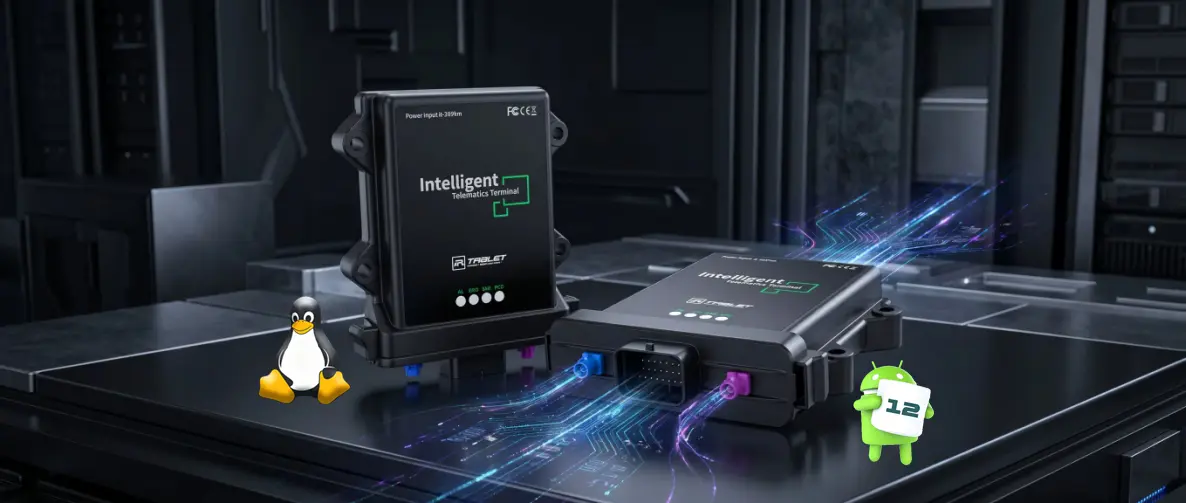
Once the processor is fixed, the operating system becomes the real product decision. Linux is not one operating system; it is a family of engineering routes with different trade-offs. The VT-10 IMX and AT-10AL both support Yocto and Debian 11. Each unit ships with one image as its factory default, and because the hardware is not coupled to a single OS, the image can later be re-flashed if the project needs the other route. Understanding the two routes is the fastest way to avoid a mismatch that surfaces only after field deployment.
Yocto is a build system used to assemble a tailored Linux image around a specific board. In the 3Rtablet delivery model, the Yocto image is configured and built before delivery: the package set is minimized, the image is controlled, and application teams develop against that image through the provided SDK. What the Yocto route gives an OEM or integrator is a smaller, deterministic software baseline with a limited attack surface.
Debian 11 is a distribution with a large package repository and the apt package manager. Application bring-up is faster because common software is already packaged and can be added without rebuilding a complete image. Debian 11 is an LTS release with long-term security support, which matters for devices that cannot be updated frequently. The trade-off is that the base system is broader and less minimal than a tailored Yocto image, and the team works within a distribution default rather than a board-specific build. It is the right route when the priority is application velocity and familiar tooling.
The decision matrix for a specific project usually comes down to a few questions. Does the deployment need a minimal, tightly controlled image with a small attack surface? The Yocto route is often the stronger fit. Does the application team want to develop against a familiar Debian environment with apt? Debian 11 suits that workflow. Is the device isolated from the network or connected through a managed gateway? Will the software be maintained by the OEM, the integrator, or the end customer? The same hardware can move between the two routes because the platform is not coupled to a single image. A unit delivered with one image can be re-flashed to the other, so the choice can be adjusted during the life of the project rather than fixed forever at the start.
ENCLOSURE AND DISPLAY ENGINEERING FOR CABS AND OPEN FIELDS
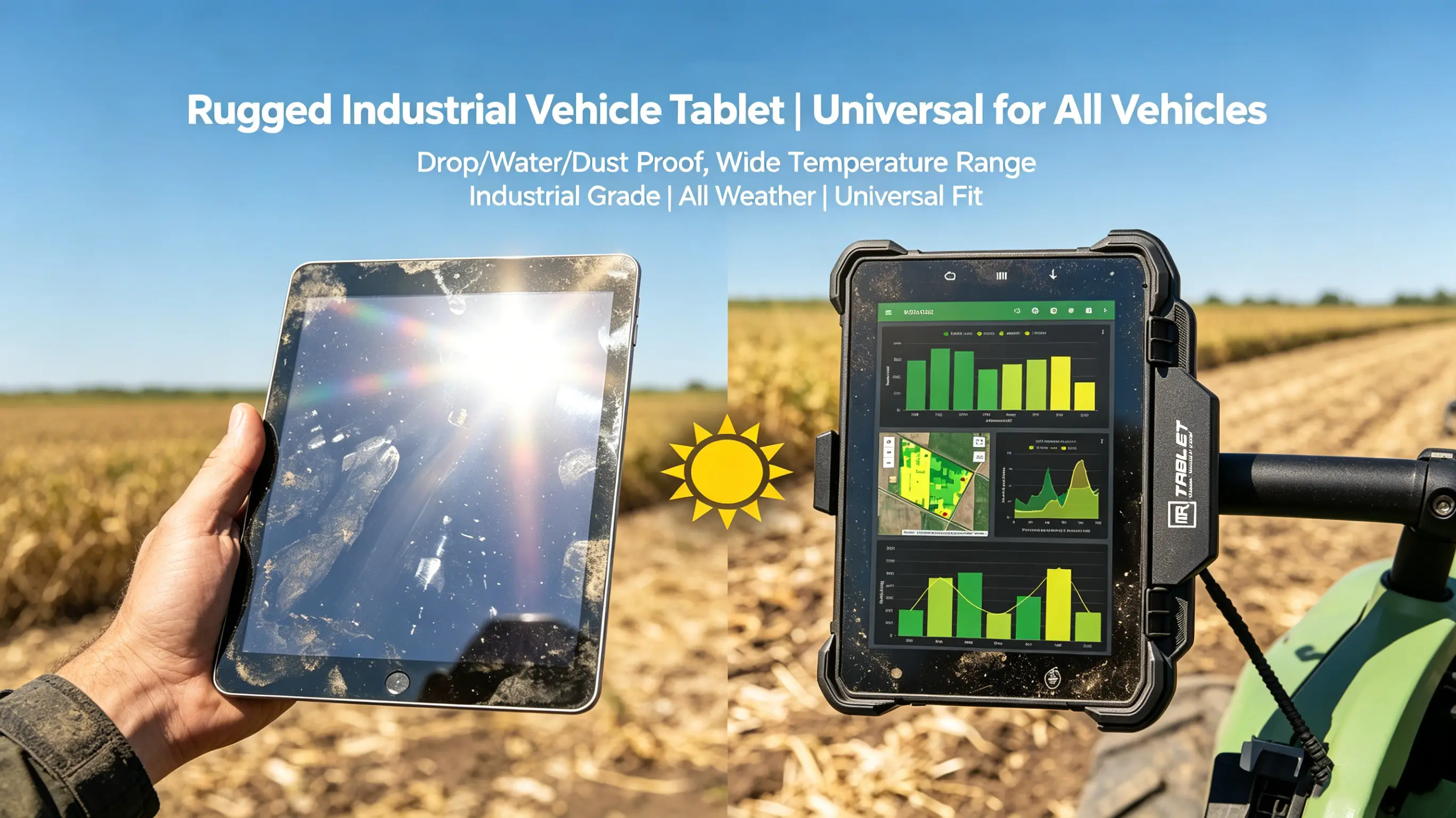
An Industrial Tablet earns its name in the enclosure and the display, not in the processor socket. The VT-10 IMX and AT-10AL use a 10.1-inch IPS panel with 1280x800 resolution and 1000-nit brightness. The brightness specification is not a marketing number; in a cab or on a machine with direct sunlight on the screen, a 1000-nit panel keeps the display readable while lower-brightness panels force the operator to shade the screen or wait for a cloud. The AT-10AL adds wet-touch and glove-touch support, which is a meaningful capability in rain, in dust, and for operators who do not remove gloves on a mine site.
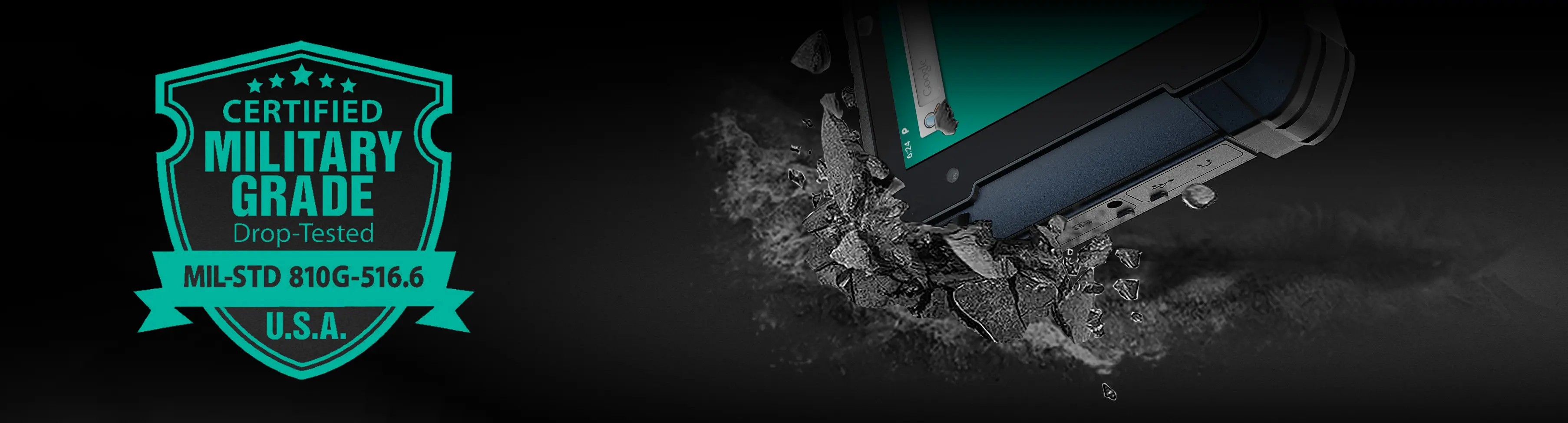
Both models are rated IP67, meaning IP6X dust protection and IPX7 water immersion resistance, and both follow the MIL-STD-810G vibration profile. The IP67 rating is relevant because an in-cab device is not protected from the environment by being indoors; it is exposed to cement dust at a construction site, fine soil at an agricultural site, and cleaning routines at a bus depot. Both models are rated across wide low- and high-temperature operating ranges, so they can be deployed in hot and cold climates without special provisions. Thermal design includes not only the enclosure but also how heat is managed under continuous load in a sealed housing.
VEHICLE POWER AS A DESIGN PROBLEM: DC 9-36V, ISO 7637-II AND ACC
Vehicle power is where consumer electronics fail first. A 12V system is not a stable 12V source: engine cranking pulls the bus voltage down, and alternator load dumps push it up in short, high-energy transients. Both tablets accept a DC 9-36V input and are built to ISO 7637-II, which covers transient voltage protection including a 174V surge for up to 300ms. The wide input range is what allows one product to work in 12V light vehicles, 24V trucks and buses, and specialized equipment without a separate converter box.
The ACC input is the other half of the power design. ACC is connected to the vehicle ignition signal, letting the tablet power on when the vehicle starts and shut down in a controlled sequence when it stops. Without ACC, an always-on device drains the vehicle battery, while a device that is manually powered can be left running overnight. The AT-10AL carries a 10F supercapacitor that provides backup power for a clean shutdown during an unexpected power loss. VT-10 IMX carries an 8000mAh lithium battery, which supports operation when vehicle power is unavailable or the tablet is used outside the vehicle.
INTERFACES AND THE VEHICLE BUS: RS232, RS485, CAN, GPIO AND RJ45
An in-vehicle computer is only useful if it can talk to the machines around it. Both models provide a set of industrial interfaces: two RS232 ports for serial equipment, CAN bus for vehicle and machinery communication, GPIO for digital inputs and outputs, and RJ45 Ethernet for network infrastructure. The AT-10AL also includes RS485 and an analog input as standard, while the VT-10 IMX offers RS485 as an option and provides eight GPIO lines through its all-in-one cable. RS485 is the standard for longer multi-drop sensor and controller networks, and the analog input supports sensors such as fuel level, temperature, or hydraulic pressure without an external converter.
CAN deserves a closer look because it is frequently listed but rarely explained. CAN is the bus used by engine ECUs, transmission controllers, and many machine subsystems. On a bus or a construction machine, CAN access lets a tablet read J1939 parameters, support diagnostics, and feed a telematics gateway with data that would otherwise require a separate adapter. In an agricultural application, CAN is also the physical layer behind many implement control connections. The all-in-one cable design used by the VT-10 IMX consolidates power, ACC, CAN, serial, GPIO, and Ethernet into one harness, which reduces installation points and makes field service simpler than a stack of loose adapters.
WIRELESS CONNECTIVITY AND EXTERNAL RTK POSITIONING
Field deployments need connectivity, but connectivity requirements differ by region. The VT-10 IMX is available with 4G LTE variants covering North America, Europe, and Australia bands, alongside WiFi 802.11ac and Bluetooth 5.0. Regional band variants matter because a device certified for one carrier network is not automatically usable on another. GNSS on the VT-10 IMX supports GPS, GLONASS, and Galileo, providing multi-constellation positioning for tracking and dispatch. The AT-10AL similarly supports optional LTE, WiFi, Bluetooth, and GNSS.
Precision agriculture raises the requirements of RTK, both tablets support working with an external RTK receiver over their interface set, integrating RTK as a separate, replaceable receiver keeps the tablet flexible and the positioning solution upgradeable. For autosteer, machine guidance, and high-accuracy mapping, the tablet provides the computing and display layer while the external receiver provides the measurement layer.
SAME PLATFORM, DIFFERENT DEFAULTS: VT-10 IMX AND AT-10AL
The two models share the same core: the NXP i.MX 8M Mini, a 10.1-inch 1000-nit display, IP67 protection, MIL-STD-810G compliance, DC 9-36V power with ISO 7637-II protection, and the same industrial interface family. The main differences are the physical form, the backup power design, and the default OS image.
AT-10AL integrates a 10F supercapacitor for safe shutdown and ships with Yocto as the factory image; because the platform supports both Linux routes, a customer can re-flash the unit to Debian 11 and later flash it back to Yocto. It includes wet-touch and glove-touch support, wide operating temperature coverage, RS485 and an analog input as standard, and weighs about 1.6kg. Its feature set aligns with machine-mounted and field-display roles where operators work in gloves or rain and the device runs a controlled image, which makes it a natural fit for agriculture and other outdoor machine applications.
VT-10 IMX integrates an 8000mAh lithium battery and ships with Debian as the factory image; a customer can re-flash the unit to Yocto and later flash it back to Debian. It provides eight GPIO lines and regional 4G LTE variants and weighs about 1.36kg. Its configuration suits telematics and fleet deployments where a Debian development environment, battery endurance, and regional cellular bands are priorities.
These fit descriptions are starting points rather than fixed rules. Model recommendations depend on the project: the same platform can be configured toward agriculture, mining, transit, construction, or logistics, and both Linux routes remain available on either unit. For a specific application, the final choice should weigh overall preferences across form factor, interface configuration, backup power, OS default, and accessories. Whichever model is selected, the shared NXP-based Linux platform keeps the engineering investment reusable across product lines.
WHAT SHIPS WITH THE PLATFORM: INTEGRATION AND DELIVERY
For an OEM or system integrator, a tablet is only part of a delivered product. The VT-10 IMX and AT-10AL are delivered with a configured OS image plus development documentation including SDK and user manuals, and the AT-10AL is prepared for Qt-based C/C++ application development. Interface configurations can be customized to specific project requirements, and the enclosure and mounting hardware are protected by design patents, which matters when a customer integrates the device into their own branded equipment. Development is supported at the application layer through the SDK; requirements below that layer are handled as separate engineering discussions at project start.
The project start is where the important decisions are made. The OS route (Yocto or Debian 11) must be fixed, the interface set must match the target machine, the LTE region must match the operating territory, and accessories such as mounts, cameras, or power adapters must be defined before firmware is frozen. Getting those choices right at the beginning is what separates a platform that survives a decade in the field from one that is replaced after the first season.
A rugged Linux tablet earns its place on a vehicle not through any single specification but through the coherence of its engineering: a processor with a long support horizon, an OS route that matches the owner's maintenance model, an enclosure built for the environment, a power design that respects the vehicle, interfaces that reach the machine, and connectivity that fits the territory. The VT-10 IMX and AT-10AL were designed around that sequence, and the choice of model and image should be made the same way: from the deployment backwards.
For full specifications and mounting options, see the AT-10AL product page and the VT-10 IMX product page. Tell us about your vehicle type, OS preference, required interfaces, and deployment environment; our team can help match the right configuration and discuss your project requirements.
AT-10AL: https://aiwebewkdg3.cmerweb.com/10-inch-in-vehicle-rugged-tablet-pc-with-linux-system-product/
Contact the 3Rtablet team: aiwebewkdg3.cmerweb.com